

Mould in a corner. A wall that feels cold even when the heating is on. A musty smell that won't go away, no matter how often you ventilate. Moisture problems in living spaces affect air quality, your family's health and the structure of your home.
Recognise your situation in 2 minutes.
Then request a no-obligation analysis.
Why do moisture problems occur in living spaces?
Many people associate moisture with basements or bathrooms, but living rooms, bedrooms and hallways are just as vulnerable. Daily activities like cooking, showering and breathing continuously produce moisture. If that moisture has nowhere to go, it condenses on the coldest surfaces in your home.
There are five main causes: poor ventilation that traps humid air, thermal bridges that cause condensation on cooler wall sections, hidden water infiltration through cracks, the roof or the facade, rising damp in ground-floor walls, and hygroscopic salts in old masonry that actively draw moisture from the air. Often several causes are at play simultaneously, and only a measurement reveals which ones.
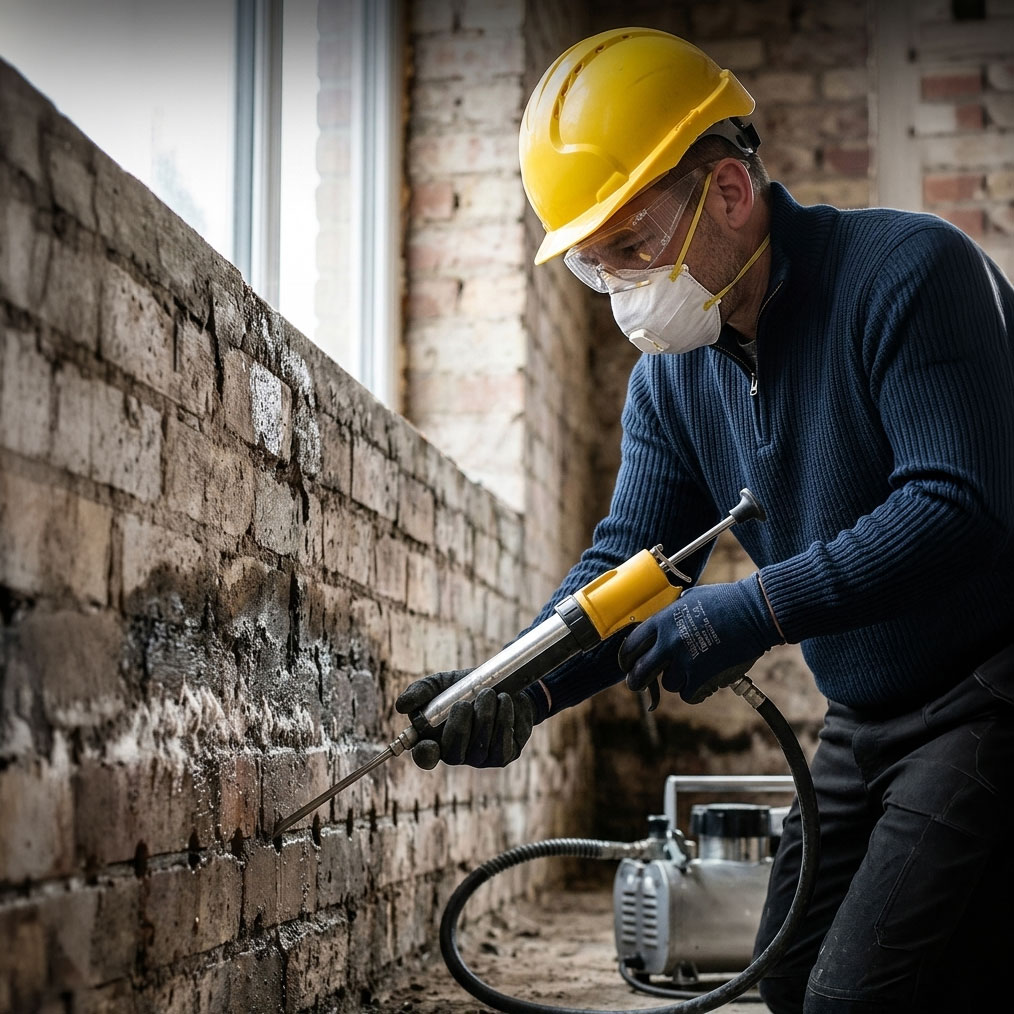
6 signs of moisture in living spaces
1. Mould patches in corners or behind furniture
Places where air barely circulates are the most vulnerable. Mould appears there as black or grey spots and always comes back if the cause isn't addressed.
2. A musty smell that persists
A permanent musty smell, even after ventilating, points to a structural source of moisture. It's not an odour problem you can solve with an air freshener.
3. Wall zones that feel cold or damp
If a wall feels cold or damp while the room is heated, there's likely a thermal bridge or infiltration at work, not a heating problem.
4. Condensation on windows that doesn't clear
Condensation normally appears in winter. If it persists at normal temperatures too, the indoor humidity level is structurally too high.
5. Peeling paint, wallpaper or plaster
Moisture attacks finishing layers from within. Loose plaster or bubbling wallpaper are visible symptoms of a deeper problem.
6. Allergic reactions or respiratory complaints
Mould spores and high humidity actively affect air quality. Recurring coughs, nasal complaints or fatigue can be directly linked to moisture in your home.
Do you recognise one or more of these signs?
Condensation, infiltration or rising damp: why the difference matters
Each cause requires a different approach. Treating condensation with an injection against rising damp is pointless, and vice versa. A professional measurement is the only way to be certain of the diagnosis, and to avoid incorrect or costly interventions.
What does a professional moisture measurement do?
Protector analyses air humidity in the room, wall moisture content at multiple heights, cold zones and dew point problems, ventilation quality, insulation issues, and infiltration sources or rising damp. The result is a measurement report with a clear diagnosis and a concrete action plan: no vague advice, but a targeted solution for each cause.
When should you call an expert?
Don't wait if mould returns after cleaning, moisture patches are growing, walls stay damp despite ventilation, multiple rooms are affected at the same time, or if occupants are experiencing health complaints.
Moisture never resolves itself. An early measurement prevents structural damage and avoids costly repairs down the line.