

Woodworms attack wooden beams and structures from the inside, recognizable by small holes and fine wood dust, and can, without professional treatment, lead to structural damage.
What are woodworms, and why are they dangerous?
Woodworms are not a single insect, but a collective term for beetles whose larvae feed invisibly inside the wood for months, sometimes years. You only notice the damage when they emerge. By then, the wood is often already severely affected internally.
5 signs of active woodworm
1. Fine bore dust (sawdust) beneath the wood
The clearest sign of activity. Larvae produce bore dust as they feed. Do you vacuum it away and it returns? Then the infestation is active.
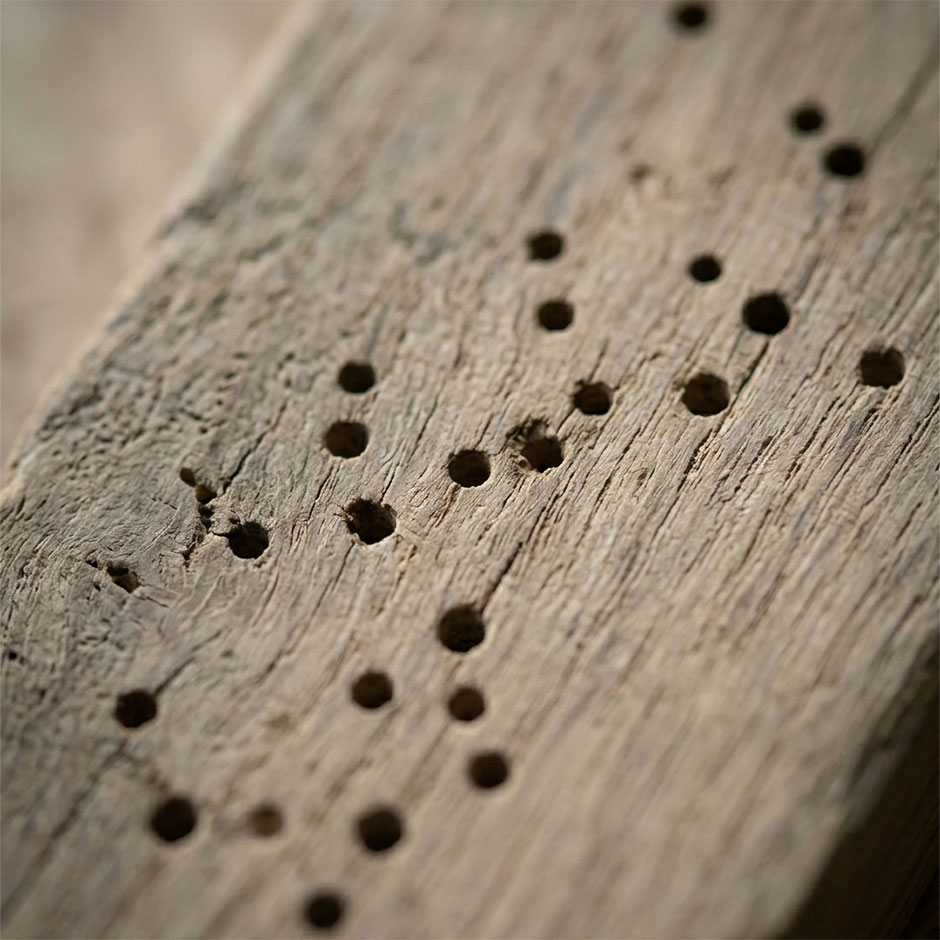
2. Small round holes in the wood
These are exit holes of adult beetles.
Are the edges sharp and light in color? → active.
Are they dull and dark? → old.
3. Hollow or soft wood
Press your thumb on a beam or floorboard. Does it crumble or sound hollow? Then larvae have hollowed out the wood from the inside.
4. Visible beetles or larvae
Adult beetles appear during warm periods (May–August). Do you see small brown beetles in your home? These are likely winged specimens that have just emerged.
5. Discoloration or collapsing areas
In cases of severe infestation, you may see discoloration, cracks, or areas that literally collapse under pressure. This requires immediate action.
In doubt?
A professional inspection provides certainty and prevents damage that would be far more costly afterwards.
Which wood-boring insects occur in Belgian homes?
| Type | Characteristics | Risk |
|---|---|---|
| Common furniture beetle | Small holes, bore dust | Furniture, floors, beams |
| House longhorn beetle | Large tunnels, creaking sounds | Structural beams, high risk |
| Deathwatch beetle | Rhythmic ticking | Damp areas |
| Powderpost beetle | Rapid attack on softwood | Attics, roof structures |
What does Protector do?
Protector inspects, treats, and repairs, tailored to the type and severity of the infestation:
- Inspection & identification, which insect, how active, which areas
- Surface treatment, for minor infestations
- Deep injection, when larvae are deep inside the wood
- Structural repair, beam ends, wood prosthetics, replacement
- Preventive after-treatment, protection against new infestation
With more than 40 years of experience and daily inspections throughout Belgium and Luxembourg.