

Dry rot (Serpula lacrymans) is the most aggressive wood-destroying fungus found in residential buildings.
This fungus attacks both weakened and healthy timber and can spread quickly through floors, walls, and concealed structures.
Typical signs:
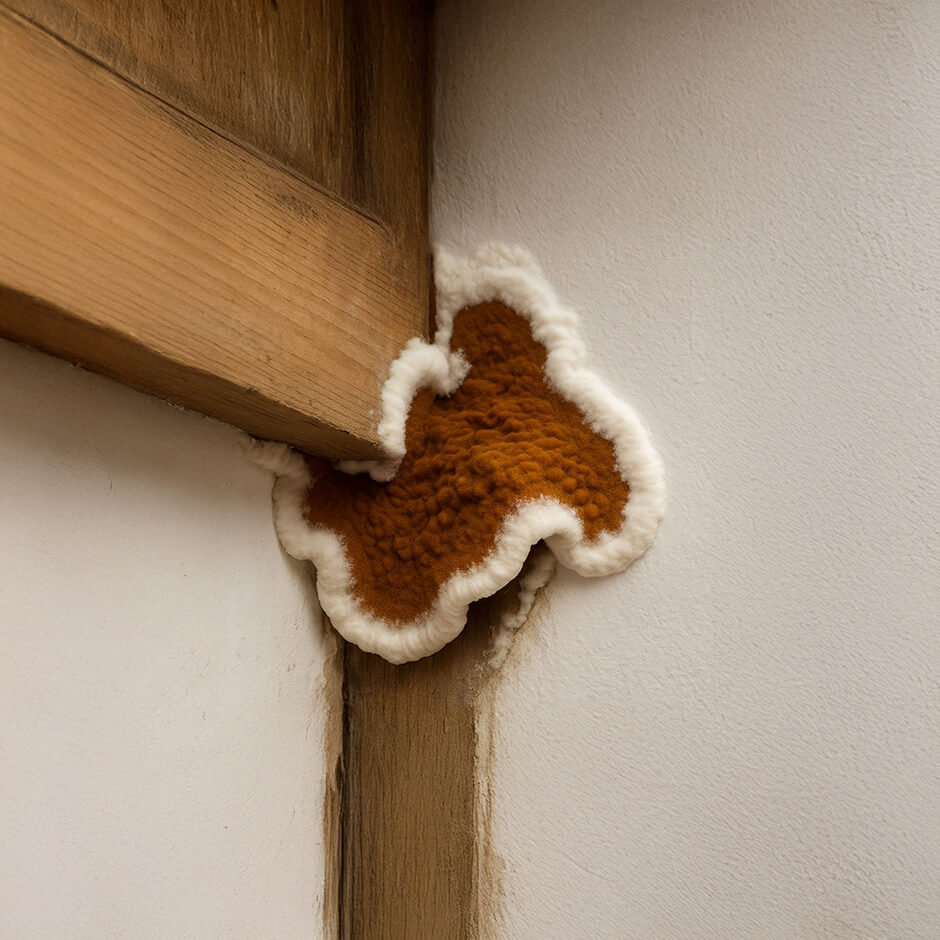
- white to greyish-white mycelium with a cotton-like or fluffy appearance
- brown rot with characteristic cuboidal cracking
- wood that crumbles, becomes brittle, or breaks apart
- a musty smell in crawl spaces, cellars, or timber floors
- rust-brown spores or fruiting bodies
- loose skirting boards, subsidence, or sagging floorboards
In this guide, you will learn how to recognise dry rot, why it is dangerous, and which professional techniques are required for permanent eradication.
What exactly is dry rot?
Dry rot is a wood-destroying fungus that breaks down cellulose, causing timber to lose its structural strength rapidly.
This fungus:
- develops through an extensive network of fungal strands (mycelium)
- produces enzymes that break down wood fibres
- can migrate through walls and cracks
- spreads rapidly in damp, poorly ventilated spaces
Without intervention, dry rot can cause severe structural damage within a matter of months.
How can you recognise dry rot?
Cotton-like white mycelium
Often grows along skirting boards, timber joints, or beneath floorboards.
Cuboidal brown rot
The wood breaks up into small blocks — a typical symptom of dry rot.
Fungal growth or fruiting body
An orange to rust-brown surface with a white edge, sometimes with droplet formation.
Timber that becomes brittle or powdery
Loses load-bearing capacity, sounds hollow when tapped, or breaks easily.
Soft, musty smell
A persistent odour in crawl spaces or damp floor areas is a strong indicator.
Causes of dry rot
Damp conditions
Leaks, condensation, rising damp, or inadequate ventilation.
Poor insulation or thermal bridges
Create damp zones where fungal growth can thrive.
Lack of ventilation beneath floors
Very common in older properties.
Timber in contact with damp walls or soil
Classic source areas for dry rot development.
Why dry rot is extremely dangerous
Dry rot:
- also attacks healthy timber
- spreads through walls, cracks, and service ducts
- causes severe structural weakening
- never stops on its own
- returns if only surface treatments are applied
DIY intervention is not possible — professional remediation is essential.
How is dry rot professionally removed?
1. In-depth diagnostic investigation
- identification of the fungal species
- moisture detection and cause analysis
- inspection of load-bearing structures
- opening of concealed areas if required
2. Removal of contaminated timber
All affected elements are removed back to sound wood.
3. Thorough chemical treatment
All timber is fully treated with fungicidal and preventive products.
4. Wall treatment in case of spread
Masonry is treated thermally or chemically.
5. Repair and replacement
Damaged beams and floor structures are safely rebuilt.
What can you check yourself?
- Is timber breaking up into blocks or crumbling?
- Do you see white, fluffy fungal growth?
- Do you notice a musty smell in floor areas or the cellar?
- Are skirting boards or floors sagging or coming loose?
- Do you see strands, flakes, or rust-brown spores?
When should you call in an expert?
An urgent professional assessment is required when:
- you observe cuboidal wood decay
- mycelium is visible
- a fungal smell persists
- floors are sagging or coming loose
- moisture damage does not stop
- you suspect the fungus is spreading through walls or floors
Protector carries out a specialised dry rot analysis and provides a complete remediation plan.