

 | What exactly is condensation?Condensation occurs when warm, humid indoor air cools and turns into water droplets. Why does this happen?Indoor air contains water vapour, especially during:
When this humid air touches a cold surface, it condenses: windows, walls, ceilings, kitchen appliances, mirrors … The dew point explained clearlyThe dew point is the temperature at which moisture in the air turns into water. For example, if a window gets colder than the dew point, droplets automatically appear. Example: If your indoor air is 21°C with 60% humidity, the dew point is around 13°C. This principle applies in almost every home. The difference is how much condensation occurs, which depends on ventilation, insulation, and moisture production. |
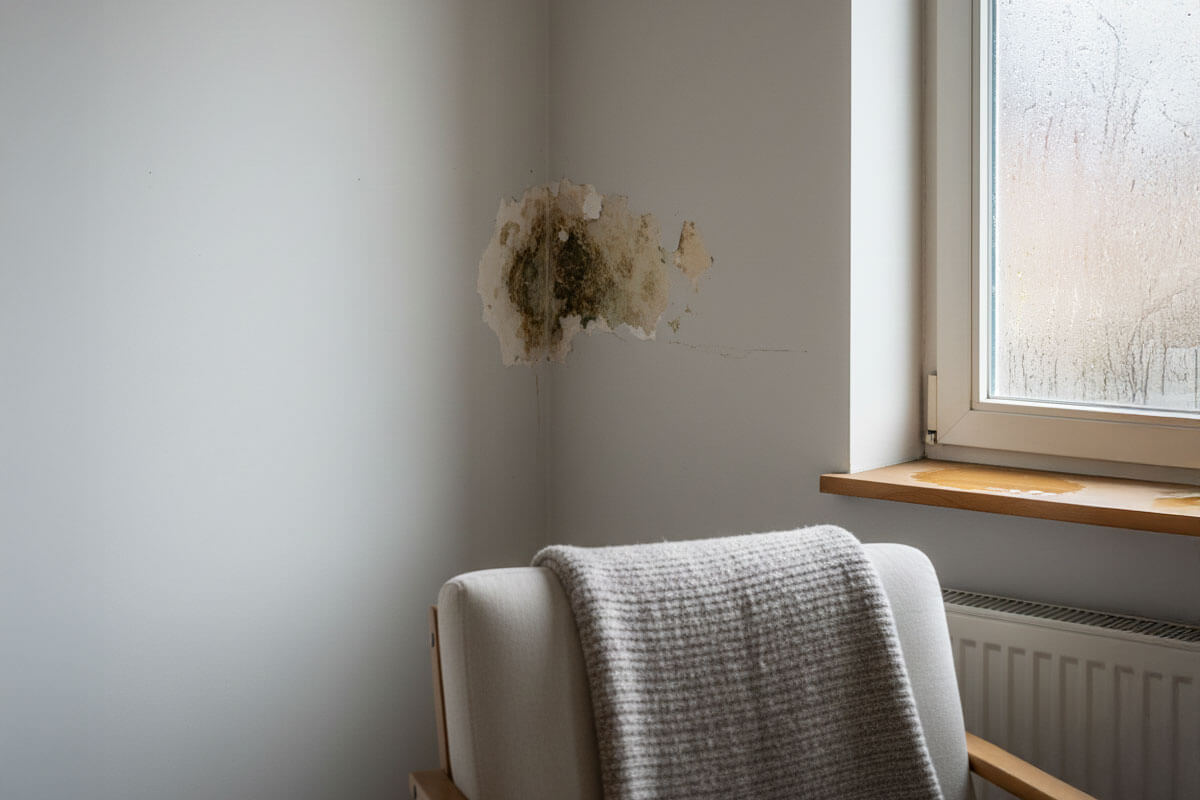
How to recognise condensation in your home?
Checklist: clear symptoms
- wet windows, especially in the morning
- water droplets on cold walls or ceilings
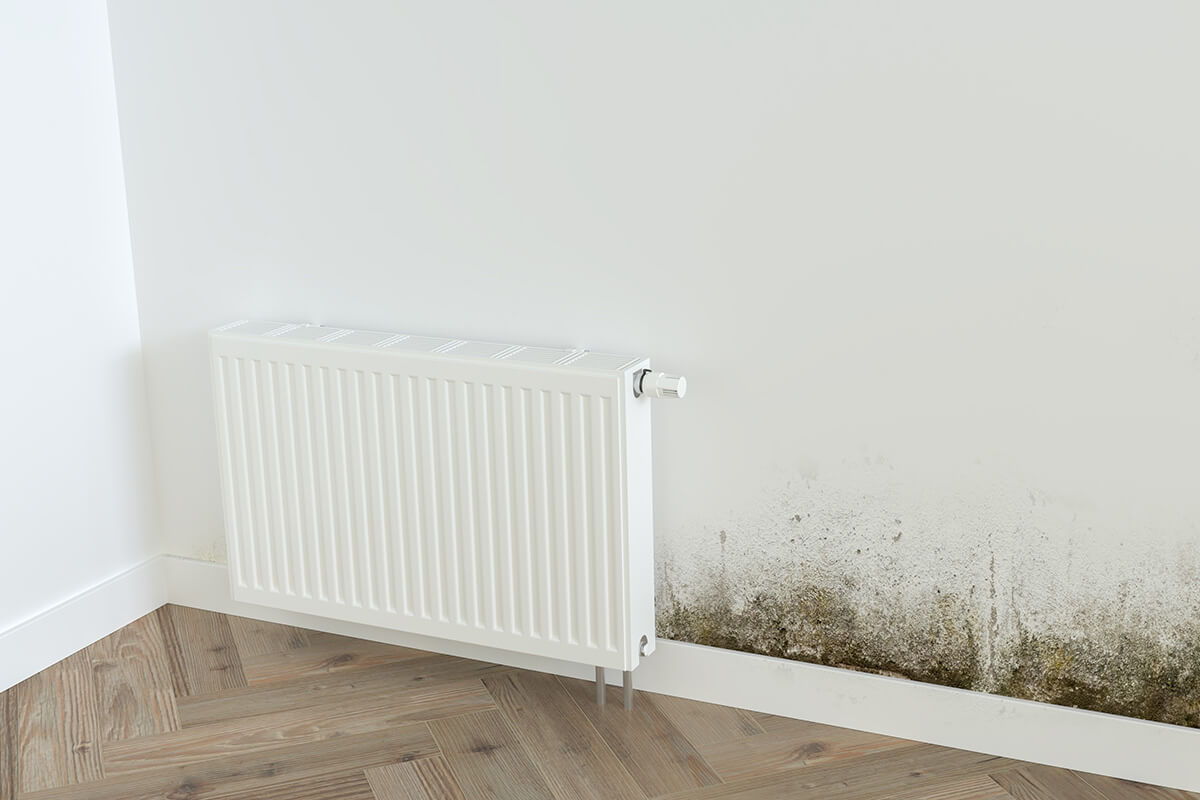
- mould spots in corners or behind furniture
- peeling wallpaper or plaster
- musty odour
- damp clothing or textiles
- discolouration on silicone joints in the bathroom
Condensation or another moisture problem?
Condensation is often confused with:
- rising damp
- penetrating damp
- leaks
Difference:
- Condensation mainly appears in the morning and on glass/cold surfaces.
- Rising damp comes from the base of walls.
- Penetrating damp comes from outside.
Protector performs an analysis to determine the exact cause.
Causes of condensation in your home
1. Insufficient ventilation
The biggest cause in Belgian homes.
Homes are increasingly well-insulated, but often without adequate ventilation → result: moisture has nowhere to escape.
2. High indoor humidity
Typical daily moisture production:
- one shower: 1 litre
- cooking: 1–2 litres
- sleep per person: 0.5–1 litre
- drying laundry: 2–3 litres
3. Cold bridges
Cold spots in internal walls where condensation collects
4. Winter and autumn period
Largest temperature differences → highest risk of condensation.
Dangers and consequences of condensationCondensation may seem harmless, but prolonged exposure can cause serious damage.
Moulds are the greatest risk. They spread spores that:
This makes condensation not only a comfort issue, but also a health issue.
|  |
Why condensation is worse in winter
That’s why Belgian homes report peaks in condensation between November and March. |
Preventing condensation: how to tackle it yourself
1. Ventilate purposefully
- Open windows during and after cooking or showering.
- Use extraction in kitchen and bathroom.
- Keep interior doors open for air circulation.
- Ensure enough gaps under interior doors so ventilation works optimally.
Why this works: humid air is quickly removed, giving condensation less chance to form.
2. Provide adequate heating
Cold rooms cause condensation faster. Provide especially damp areas like bathrooms and kitchens with sufficient baseline heat. In bedrooms, a light, constant temperature helps avoid temperature fluctuations and condensation.
Why this works: warmer surfaces reach the dew point less quickly
3. Avoid drying laundry indoors
Indoor drying adds litres of moisture to the air, a direct cause of condensation.
Tip: Dry outside or use a vented or heat-pump tumble dryer.
4. Use a dehumidifier
A dehumidifier can help during peak periods or temporary issues, but does not solve the underlying cause.
Good to know: this is a temporary solution, not structural.
5. Consider a ventilation system
Structural solution: mechanical ventilation continuously removes moisture and keeps humidity stable.
Suitable for: homes with recurring condensation, insufficient window ventilation, or modern airtight constructions.
 | When to call an expert?You should contact a specialist if you:
Protector will visit you for a professional assessment. |
The structural solution: customised mechanical ventilation
Condensation occurs when too much moisture is produced and too little air circulates. To solve the problem sustainably, a ventilation system is the only structural option.
Ventilation system C
- natural supply
- mechanical extraction
- ideal for renovations
- low installation impact
Ventilation system D
- mechanical supply and extraction
- heat recovery
- best comfort and energy efficiency
Installation duration
Average execution: 1 to 3 working days, depending on the type of property.
Protector operates throughout Belgium
|
![Map of Belgium with the cities where Protector has offices [NOTE: place names on the map are in French, even on NL pages]](/images/protector-kantoren-kaart-fr.png "Map of Belgium with the cities where Protector has offices [NOTE: place names on the map are in French, even on NL pages]")
Why choose Protector?
|
Request your free inspection & quote |
Answers to the most frequently asked questions about condensation
What is the main cause of condensation in the home?
Condensation always occurs due to the same combination: warm, humid indoor air cooling and turning into water droplets when it touches a cold surface. In Belgian homes, insufficient ventilation is by far the largest cause. Daily activities like cooking, showering, sleeping, and washing release litres of water vapour. If this humid air is not removed promptly, indoor humidity rises and the dew point is quickly reached. Especially in winter, when windows are colder and less ventilation occurs, the problem increases significantly. If you see wet windows or damp spots almost every day, the air circulation in your home is too low, and a professional ventilation assessment is essential to prevent mould and structural damage.
Is condensation harmful to my health and home?
Yes. Condensation may seem harmless, but prolonged moisture exposure causes issues affecting both your health and home. Mould forms quickly in areas with recurring condensation; its spores cause irritations, allergies, asthma, and headaches. Beyond health risks, condensation affects your home's structure: plaster peels, wallpaper curls, wood rot can occur, and paint may blister. In some homes, long-term condensation leads to serious damage to walls and ceilings. Early action is crucial: regularly recurring condensation always indicates structurally high indoor humidity.
What is the difference between condensation and rising damp?
Condensation arises from humid indoor air cooling on cold surfaces such as windows, ceilings, and corners. Spots appear mainly at the top of walls or on glass, often in the morning or after activities like showering and cooking. Rising damp, however, comes from the ground: moisture travels up the wall by capillary action, causing marks from the floor upwards. You often see dry salt efflorescence or peeling plaster at the base. The treatment differs completely: condensation is solved with ventilation, while rising damp requires wall injection or structural damp treatment. When in doubt, a professional analysis ensures a correct diagnosis and prevents incorrect interventions.
How can I reduce condensation in my home myself?
You can temporarily reduce condensation by ventilating purposefully: open windows during cooking and showering, keep interior doors open for air circulation, and use extraction correctly. Keep the home at a stable temperature so surfaces do not get too cold. Preferably avoid drying clothes indoors, as this greatly increases humidity. A dehumidifier can help during temporary peaks, but does not provide a lasting solution. If you see daily condensation, the indoor humidity is structurally too high, and a mechanical ventilation system is needed to solve the problem permanently.