

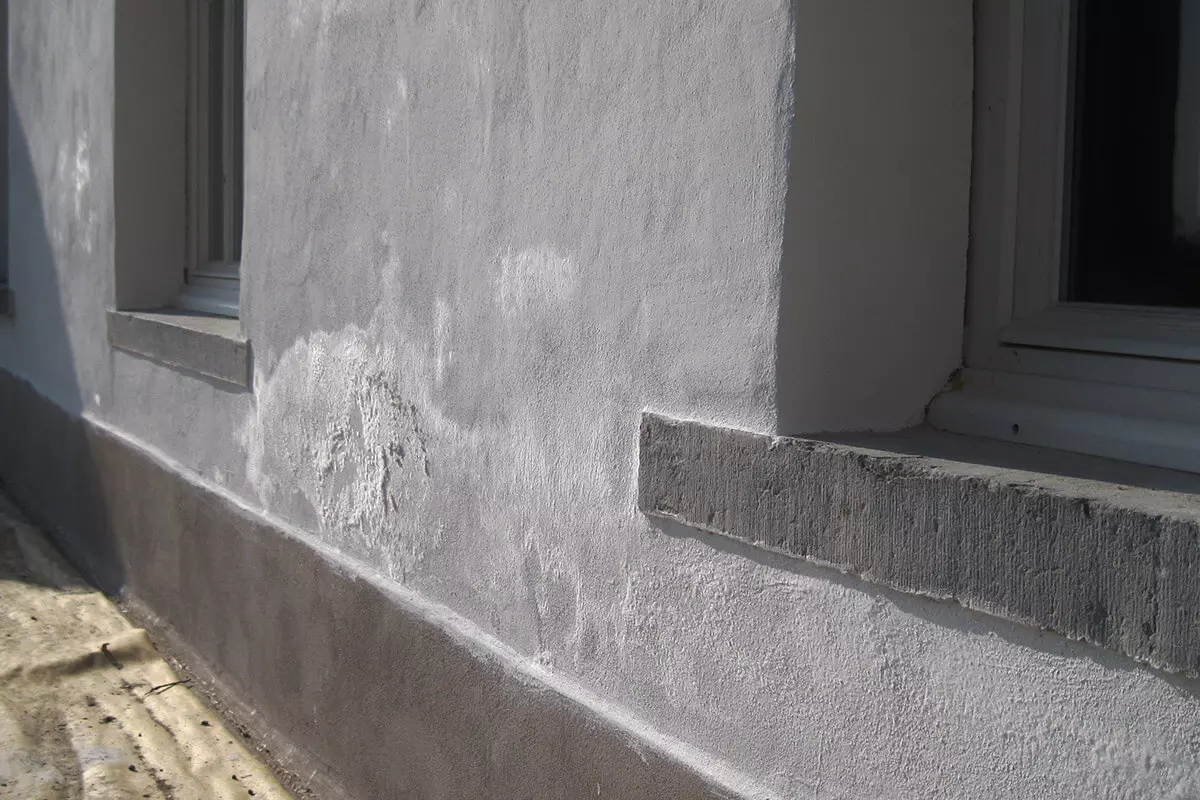
 | What is rising damp?Rising damp, also known as capillary moisture or ascending moisture, occurs when ground moisture is drawn up through porous materials such as bricks, mortar or natural stone. This is a capillary process: the tiny pores in the material act like a sponge. Why does this happen?
|
How to recognise rising damp? (Symptoms & self-check)
You can often recognise rising damp by these typical signs:
- Loose skirting boards
- Discolouration and damp patches at the base of walls
- Peeling paint or wallpaper
- Salts (white crystals) on the wall
- Flaking plaster
- Musty smell in the home
- Cold, damp base walls
- Damp-feeling interior walls
During an inspection, our specialists use professional moisture and salt meters to determine whether it is rising damp and not condensation or penetrating damp.
Why prompt treatment of rising damp is essentialFailing to treat rising damp can result in:
In homes with wooden floors or historic beams, rising damp can also lead to:
We therefore recommend a diagnosis within 10–30 days of the first symptoms to limit damage. | 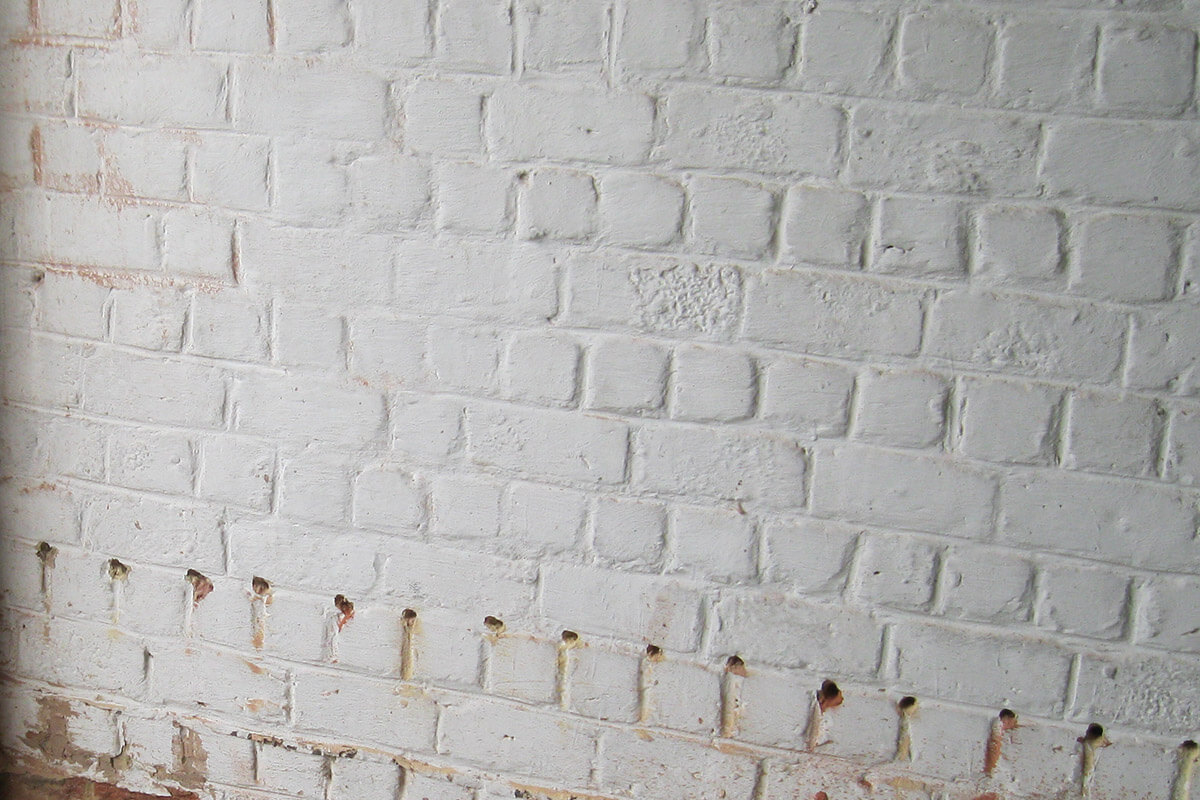 |
Professional diagnosis by Protector (essential first step)An accurate diagnosis is crucial. Our specialists take sufficient time (45–90 minutes) to examine your building and produce an objective report. During a diagnosis we check:
After the diagnosis, you receive a clear report, including:
|
How does Protector treat your rising damp?
Our method consists of several phases, depending on the severity of your problem, wall condition, and salt content. Below is our complete procedure.
1. Preliminary analysis
We determine:
- Exact drilling height
- Drilling pattern
- Type of drill
- Required amount of injection gel
- Wall depth
- Salt load in the masonry
This ensures a correct and long-lasting treatment.
2. Wall injection with Protector Syngel 30
Protector exclusively uses the proprietary product Protector Syngel 30, suitable for all types of masonry.
What makes this product unique?
- Highly concentrated injection gel
- Solvent-free and odourless
- Very efficient moisture blocking
- Suitable for very damp walls
- Also effective in hollow or compact bricks
- Reversible chemical reaction creating a durable horizontal barrier
How does the injection work?
- Drill holes are made at a slight angle
- Each hole is filled with the exact dose of gel
- The gel spreads evenly through the pores
- The barrier starts forming within a few hours
- Once fully saturated, all holes are neatly sealed
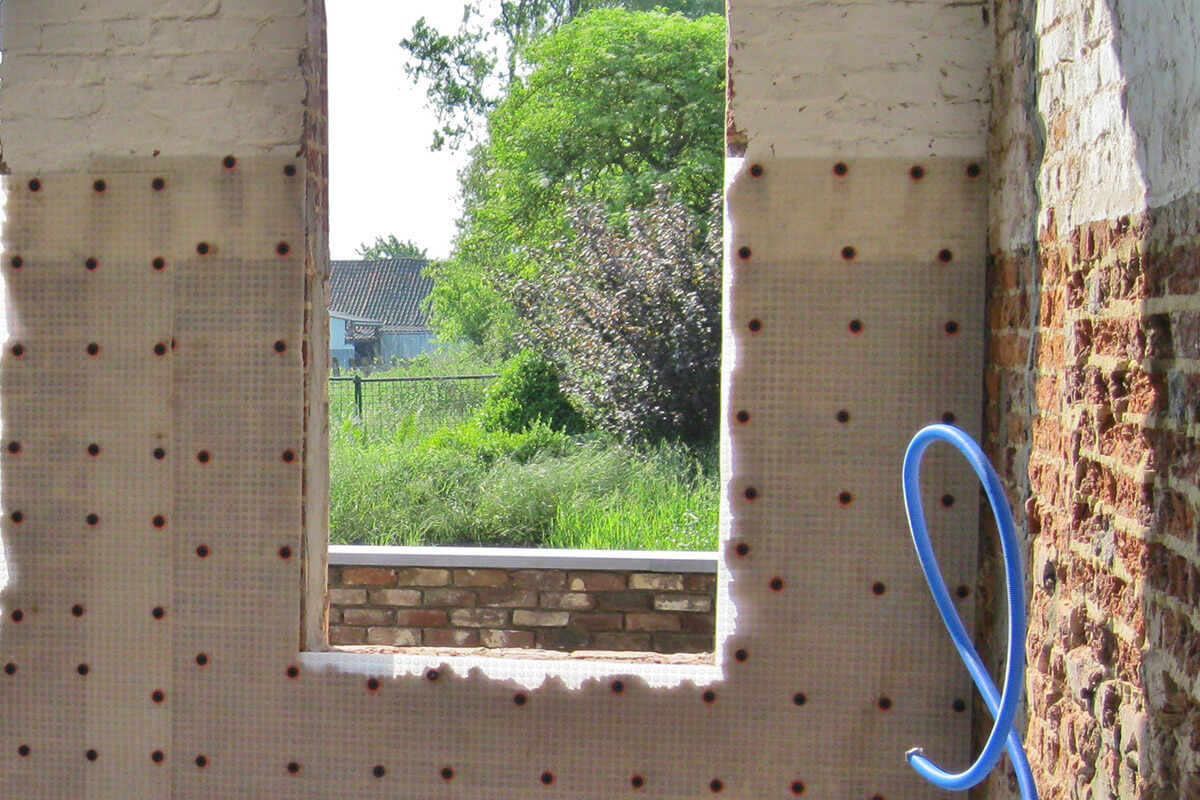
3. Salt-resistant foil (if necessary)
For higher salt concentrations, foil is necessary to prevent salts from re-entering the plaster.
This foil:
- Prevents salt crystallisation
- Blocks residual moisture
- Ensures a smooth final finish
- Increases the durability of your new plaster
During the visit, we determine whether foil is required.
4. Renewed plaster
Depending on your choice, Protector can:
- Remove the old plaster
- Apply a breathable, moisture-regulating plaster system
- Finish plaster ready for painting
Plastering typically takes 1–2 days, depending on the surface area.
 | How long does it take for walls to dry?Drying time depends on:
On average, this takes 3 to 12 months. Our specialists can provide an accurate estimate during the diagnosis. |
What does treating rising damp cost?
The price depends on:
- Total length of the wall
- Type of masonry
- Thickness
- Salt content
- Need for foil or plaster work
Exact amounts are included in the quote after inspection.
Protector Syngel 30: our solution for rising damp
Protector Syngel 30 was specifically developed for Belgian building issues.
Advantages
- Works quickly
- Effective in heterogeneous materials
- Durable
- Very efficient under high moisture load
Protector operates throughout Belgium
|
![Map of Belgium with the cities where Protector has offices [NOTE: place names on the map are in French, even on NL pages]](/images/protector-kantoren-kaart-fr.png "Map of Belgium with the cities where Protector has offices [NOTE: place names on the map are in French, even on NL pages]")
Why choose Protector?
|
Ready to have your rising damp treated?Our experts are happy to visit you for a professional diagnosis. |
Expert advice on rising damp: answers to the most frequently asked questions
What is rising damp exactly and how does it occur?
Rising damp is groundwater that is drawn up through tiny pores and capillaries in your walls. Materials such as brick, mortar and natural stone act like a sponge when the damp-proof course is damaged, missing or ineffective. Moisture sometimes rises over a metre, carrying salts that crystallise on contact with air. These salts cause lasting damage to plaster, joints and paintwork. Older or poorly insulated homes, properties with raised ground around the facade, and historic buildings are particularly susceptible. Unlike condensation or penetrating damp, rising damp always comes from the bottom of the wall. A professional technical diagnosis is essential to make the correct distinction.
How can I recognise rising damp in my home?
Typical symptoms of rising damp start at the base of the wall: loose skirting boards, discolouration, wet areas, damaged plaster and peeling paint or wallpaper. Often you will see a white crystalline deposit from salts drawn up with the groundwater. The room feels colder and damper, and a musty smell may develop. These signs can resemble condensation problems, but with rising damp, they are confined to the lower 20–120 cm of the wall. A professional moisture measurement at multiple heights is the only reliable way to confirm rising damp.
How does Protector treat rising damp and why does this method work?
Protector stops rising damp by injecting walls with the high-quality Syngel 30 gel. Our specialists drill a precise pattern at the correct height and inject the gel under controlled pressure. The gel spreads evenly through the pores, forming a durable horizontal moisture barrier. For high salt concentrations, an additional salt-resistant foil is applied to prevent further damage from residual salts. After treatment, the wall can be finished with a breathable plaster system to support drying. This approach works for traditional and historically valuable buildings, in homogeneous and heterogeneous masonry, and even in walls with high moisture load.
How much does it cost to professionally treat rising damp?
The cost of treating rising damp depends on wall length and thickness, type of masonry, moisture content, salt concentration, and any additional work such as salt-resistant foil or plaster repairs. As no two situations are identical, pricing is always determined after an on-site technical diagnosis. You then receive a clear, detailed quote outlining all steps, materials, and finishes, so you know exactly what your investment covers and which guarantees apply.
How long before my walls are completely dry?
After wall injection, the natural drying process begins. Drying time typically ranges from 3 to 12 months, depending on wall thickness, ventilation, temperature, moisture content and material type. In areas with high salt content or low temperatures, the process may take slightly longer. Plastering can often be done within a few weeks, depending on the chosen finish and residual moisture. During the diagnosis, our specialists provide a realistic timeline based on measurements.
What is the difference between rising damp, condensation and penetrating damp?
These three moisture problems are often confused but have completely different causes and solutions. Rising damp comes from the ground via a defective or missing damp-proof course and is always at the base of the wall. Condensation forms when warm, moist air meets cold surfaces and occurs on windows, ceilings or cold walls. Penetrating damp is rainwater entering through exterior walls via cracks, porous bricks or poor joints. A correct diagnosis is crucial to avoid wrong interventions that could worsen the damage.
Why do so many Belgian homeowners choose Protector?
Protector works with a thorough diagnosis, proprietary treatment gel, and finishing method that addresses both moisture and salt problems. Our specialists take 45–90 minutes for a complete inspection using professional moisture and salt meters. Thanks to Syngel 30, even challenging walls such as hollow bricks, heterogeneous masonry, and very damp walls can be effectively treated. We ensure minimal disruption during works and provide a customer-friendly guarantee. With teams across all Belgian provinces, you are always assured of fast and reliable service.