

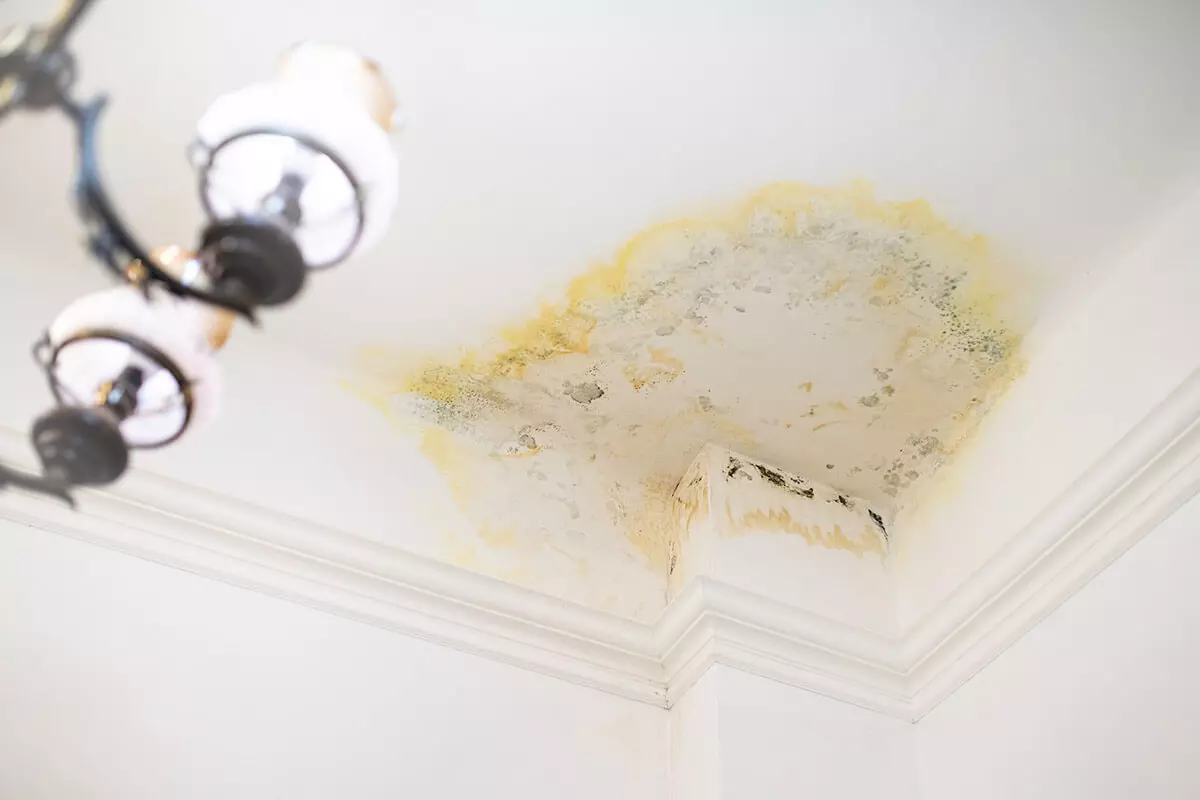
 | How does damage occur to ceiling cornices?The most common causes
|
How can you identify structural damage to your ceiling ornaments?
Below is an overview of typical signs.
Checklist: Does my cornice urgently need repair?
- Cracks larger than 1 mm in the cornice or ceiling
- Plaster crumbling or powdering
- Visible gaps between cornice and ceiling
- Ornament starting to sag
- Dark spots from water
- Pieces that have already fallen
- Rosette appearing to hang loose
If at least one of these points is present, we recommend an inspection.
Our professional on-site assessmentA perfect restoration starts with an accurate diagnosis. That’s why Protector always conducts a thorough inspection.
Protector performs a full functional test during inspection. |
How we restore your cornices and rosettes, step by step
Protector uses restoration techniques that comply with heritage conservation and historical preservation standards. Below is the complete process.
1. Stabilising the ceiling and ornament
Before restoration, we ensure safety.
- We temporarily secure loose parts
- If necessary, we install new plaster supports.
- We remove all hazardous areas to prevent further plaster from falling.
2. Cleaning and preparation
- All loose parts are carefully removed.
- Old paint layers are removed if needed.
- The surface is dust-free to ensure perfect adhesion of new plaster.
3. Mould making based on original profiles
This is where Protector excels.
Our restorers make a mould using:
- a profile gauge (template)
- a silicone or rubber mould
- a multi-step cast for deep ornaments
This mould is an exact copy of the original piece, preserving the historical character perfectly.
4. Casting new ornament pieces
The new pieces are cast in:
- traditional plaster
- lime-plaster mix
- restoration plaster following professional guidelines
We reconstruct:
- missing parts
- corner pieces
- rosettes
- entire ornament zones
5. Installation and integration into the existing ceiling
We cut the new segments to size and install them using:
- mechanical adhesion
- restoration plaster
- special binding agents suitable for heritage buildings
6. Finishing to paint-ready level
After installation:
- ceiling and cornices receive a thin finishing layer
- all joints are made completely invisible
- your painter can start immediately
Historical value guaranteed
Protector is listed among specialised restoration companies for ceilings, interior ornaments, and beam ends by Heritage Conservation. This guarantees quality and authenticity.
 | What makes Protector unique in Belgium?Heritage Conservation recognitionProtector is among the select group of companies officially recognised for restoring historic ceilings and ornaments. Specialists experienced in plaster ornamentsOur teams have expertise in:
Modern techniques combined with traditional craftsmanshipWe work both traditionally and with modern materials, depending on what the heritage building requires. Service throughout Belgium + LuxembourgWith teams in all provinces, we respond quickly to urgent damage. |
What does cornice restoration cost?The price depends on:
Is restoration cheaper than replacement?In historic buildings, restoration is almost always cheaper, because replacement:
|
Protector operates throughout Belgium
|
![Map of Belgium with the cities where Protector has offices [NOTE: place names on the map are in French, even on NL pages]](/images/protector-kantoren-kaart-fr.png "Map of Belgium with the cities where Protector has offices [NOTE: place names on the map are in French, even on NL pages]")
Why choose Protector?
|
Would you like your cornice or rosette professionally restored?Your historic interior deserves expert care. |
Frequently asked questions about restoring cornices and rosettes
How do I have damaged cornices or rosettes on my ceiling professionally repaired?
Repairing damaged cornices or rosettes requires specialised craftsmanship, as every movement affects old plaster, layers, and historical details. The first step is an expert inspection to assess the ceiling’s stability and the ornament’s adhesion. Then, a restorer creates a precise silicone mould of the original profile, ensuring each new piece fits exactly. Missing parts are cast in restoration plaster and seamlessly integrated into the existing structure. Cracks are repaired, joints concealed, and the work is finished paint-ready. An inspection typically takes 45 to 90 minutes, after which you receive a clear, non-binding quote.
What are the benefits of hiring a restoration specialist for cornices?
A restoration specialist ensures your cornices are repaired solidly and durably while matching the original design exactly. In older homes, ornaments are often unique and no longer available elsewhere. Using silicone moulds, profile gauges, and authentic casting techniques, a specialist can recreate every detail. The ceiling’s stability is also checked to prevent future damage. The finish is completely invisible and blends perfectly with existing ornaments. Protector works according to Heritage Conservation standards, combining traditional craftsmanship with modern restoration techniques.
How do I know if my cornice urgently needs repair?
Cracks, crumbling edges, or plaster pieces on the floor are clear signs, but more subtle forms of damage exist. These include micro-cracks, slightly sagging rosettes, small gaps between cornice and ceiling, or discoloration from moisture. Condensation or water ingress can cause hidden damage that may lead to bigger problems. If a part of an ornament comes loose, it can create hazardous situations. A 45 to 90-minute inspection will determine the severity and urgency of the repair. The sooner you act, the smaller the intervention and cost.
What does it cost to restore ceiling cornices?
Costs depend on the severity of the damage and the ornament’s detail level. A simple crack can be repaired quickly, while complex profiles or missing pieces require more work. Factors affecting price include linear metres, material choice, pattern complexity, stabilisation needs, and moulding techniques. After a 45 to 90-minute inspection, you receive a clear, non-binding quote tailored to your ceiling. This ensures you know exactly what the repair involves and the expected cost.
How exactly does the ornament restoration process work?
The restoration process consists of several precise steps. First, the ceiling is stabilised to prevent additional parts from detaching. Next, all loose, powdered, or damaged elements are removed. A silicone or rubber mould of the original profile is created so each new piece fits perfectly. Reconstruction is done in restoration plaster following professional guidelines, then cut and installed. All joints are concealed, and the surface receives a thin finishing layer, fully paint-ready. Protector applies this method in hundreds of projects annually, always achieving an invisible final result.
Is restoration better than fully replacing cornices?
In almost all historic buildings, restoration is the best and most cost-effective choice. Replacement causes extensive work, damages authentic details, and rarely replicates the style exactly. Old profiles are often no longer available. Restoration allows exact reproduction of models, patterns, and dimensions using moulds. The existing ornament is respected and integrated into the whole. Restoration is generally cheaper, less damaging, and produces the best result, seamlessly finished with restoration plaster according to professional standards.
In which regions can Protector restore cornices?
Protector carries out restorations throughout Belgium and the Grand Duchy of Luxembourg. Our local teams are familiar with typical regional damage, such as moisture problems in West Flanders, vibration damage in Antwerp, and aged plaster layers in Brussels townhouses. Provinces covered include Limburg, Flemish Brabant, Walloon Brabant, Hainaut, Namur, East Flanders, Luxembourg (BE), and Luxembourg (EU). This regional presence allows rapid response, immediate stability assessment, and clear, tailored quotes for your home and ornament type.