

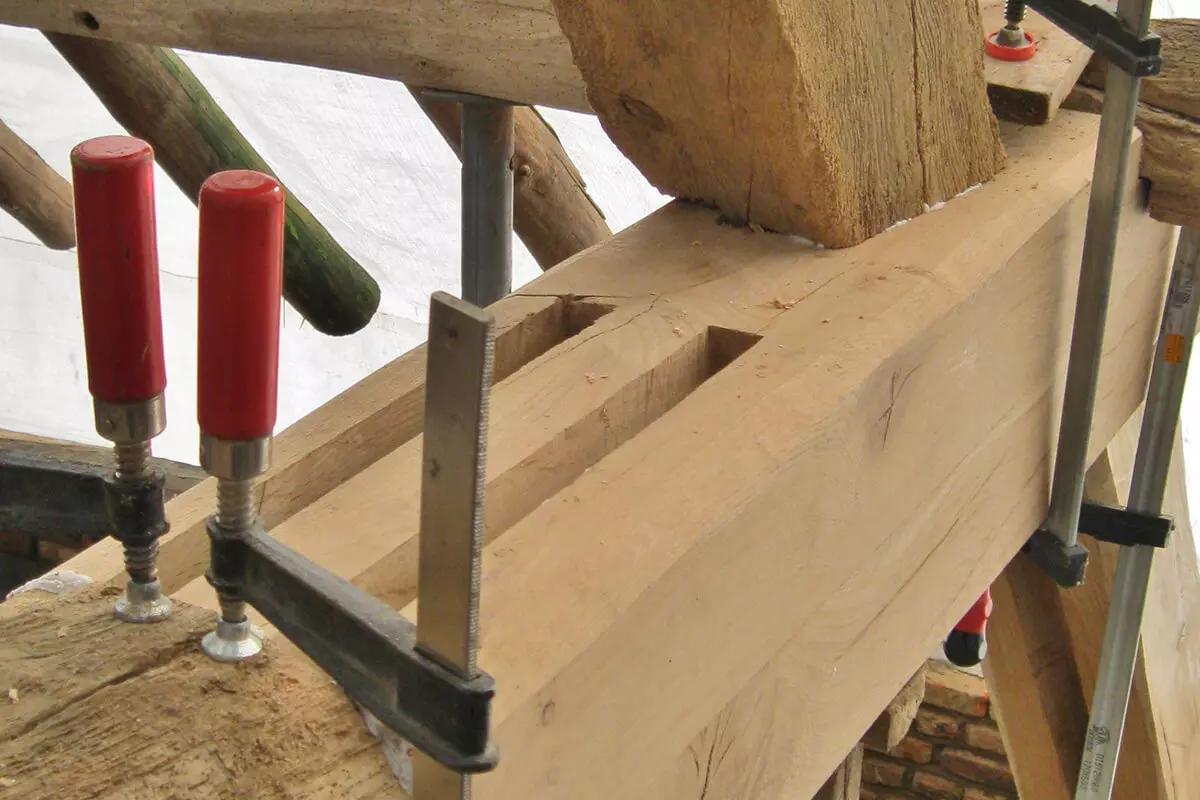
 | When should a beam be replaced?Restoration is possible when:
Replacement is necessary when:
A specialist determines this through probing tests and calculations. |
How to identify damage to your beam, moulding, or ceiling?
Damage to wooden structures is often noticed too late. However, there are clear signs that can warn you early.
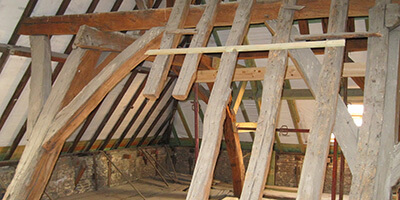
Signs of damage to beamsPay attention to these symptoms:
Not sure if your beam is weakened? | Signs of damage to your ceilingAffected ceilings often show:
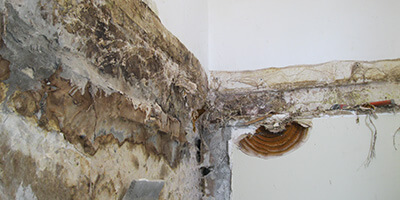
Dealing with dry rot or cellar fungus? The fungus often spreads its mycelium behind the plaster, invisible to the naked eye. Signs in mouldings and ornaments
|
What causes the damage? (moisture, woodworm, fungus)
Damaged structural elements never occur without reason. There is always an underlying cause.
MoistureMoisture is wood’s greatest enemy. Causes:
Moisture softens wood and creates an ideal environment for fungi such as dry rot or cellar fungus. |
Woodworm & other wood-boring insectsTypical culprits:
They bore through load-bearing beams, leaving empty tunnels that weaken the beam structurally. |
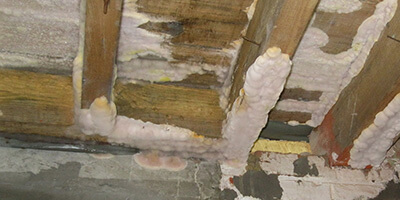
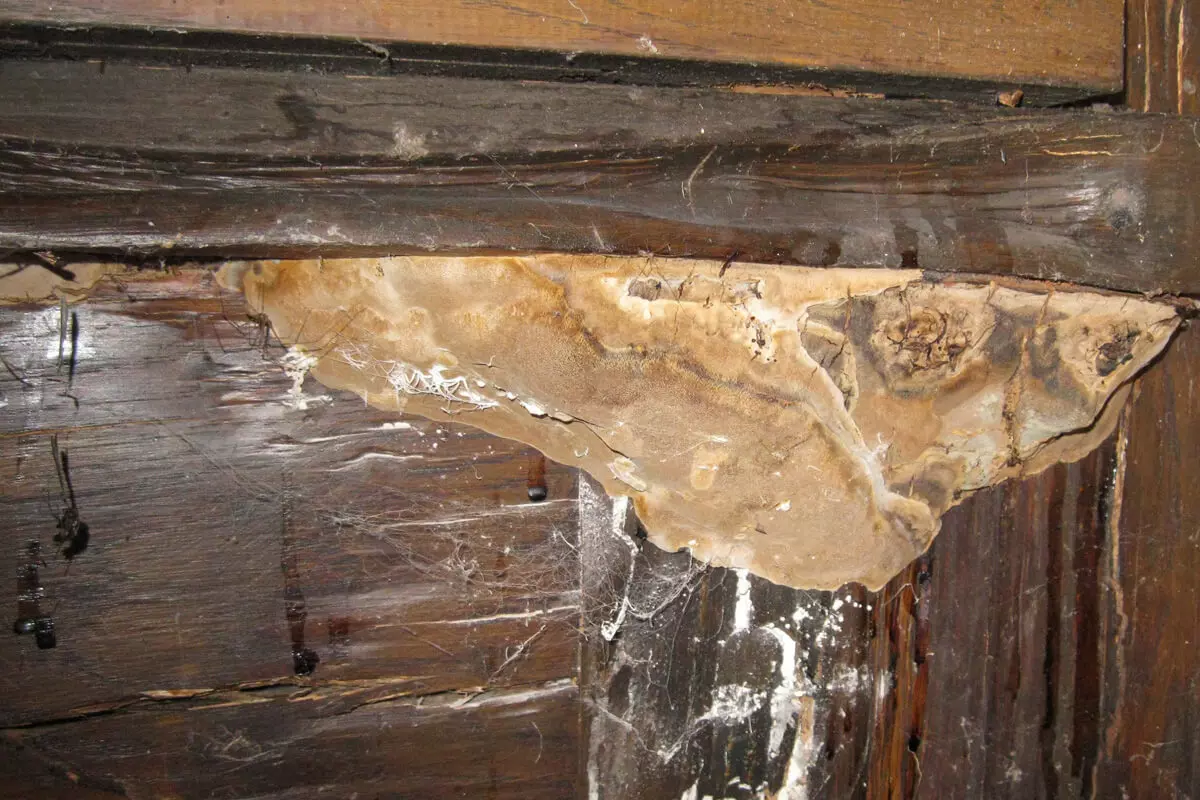
Dry rot, cellar fungus & other wood-destroying fungiFungi cause the most damage because:
Dry rot is known as the “cancer of the building”. |
Our restoration method: safe, sustainable, and invisible
Protector works via a 3-step model that guarantees structural safety. Choose a step to learn more.
1. Cause detection & diagnosis |
A thorough diagnosis lasts 60–90 minutes and includes:
You will receive a report and proposal for repair afterwards. |
2. Treatment of the underlying problem |
Before restoration, the cause must be eliminated:
The type and duration of treatment depend on the situation. |
3. Restoration of beams, ceilings, and mouldings |
1. Stabilisation 2. Removal of damaged wood 3. Structural anchoring
Techniques vary per project and are always discussed beforehand. 4. Filling and rebuilding
5. Restoration of mouldings and ornaments
6. Finishing
|
Restoration costs (indicative)Restoration costs depend on:
These prices are guidelines only. The exact cost is determined after a diagnosis.
| 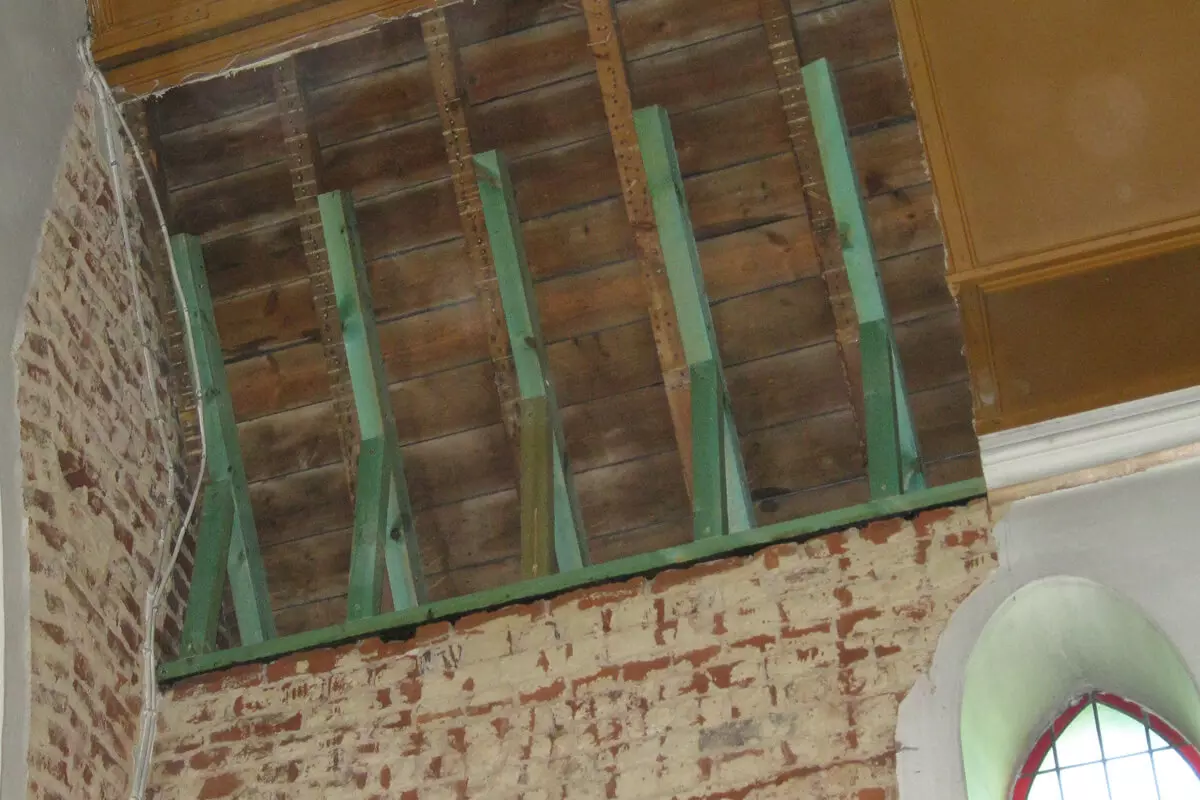 |
Protector operates throughout Belgium
|

 | Checklists & step-by-step planChecklist: is restoration urgently needed?
If you answer YES to any: an inspection is recommended. Step-by-step full procedure
|
Why choose Protector?
|
Request your inspection or restorationA problem with a beam, ceiling, or moulding requires a fast and proper approach. |
Answers to your questions about beam and ceiling restoration
How do I know if my beam can still be restored?
Whether a beam can still be saved mainly depends on the depth and extent of the damage. In many cases, restoration is entirely possible, provided there is enough healthy core to build a sustainable reconstruction. During an inspection, a specialist carries out probing tests and determines whether at least 70% of the beam retains its load-bearing capacity. Localised damage is usually easy to restore, whereas a fully sagged or crumbling beam often requires replacement. A professional 60–90 minute diagnosis provides an exact picture of residual strength, extent of infestation, and the most suitable repair technique, such as epoxy anchoring or partial replacement. This ensures you know exactly what is structurally safe.
What is the difference between rot, woodworm, and fungus?
Rot occurs when moisture acts on wooden structural elements over time, attacking the material from within. Woodworm is damage caused by insect feeding: species such as common furniture beetle, varied carpet beetle, and house longhorn beetle bore tunnels that weaken the beam. Fungi like dry rot and cellar fungus are the most aggressive because they truly consume the wood and can spread behind plaster, walls, or floors. Each type of damage requires a different approach, both in treatment and restoration. Therefore, Protector always starts with a thorough diagnosis to determine the exact cause. Only then is the appropriate treatment and structural repair carried out.
How is a professional beam restoration carried out?
Restoration begins with a 60–90 minute inspection analysing moisture content, stability, and exact damage. Next, the underlying cause is addressed, such as moisture control, woodworm treatment, or fungal treatment. Once the structure is safe, we support the ceiling or floor above. Damaged wood is removed and the beam is reconstructed using techniques such as epoxy anchoring, chemical restoration mortar, resin building, or metal reinforcement. Finally, we restore plasterwork, any mouldings, and the ceiling. The result is a safe, durable, and aesthetically invisible repair.
How much does it cost to restore a beam or ceiling?
Cost depends heavily on the cause and severity of damage. Full beam restoration usually ranges between €1,200 and €3,500. Repairing mouldings or ornaments typically ranges between €150 and €600. Factors like accessibility, extent of damage, material choice, and reinforcement needed determine the final price. The exact cost can only be confirmed after an on-site inspection, where all amounts are verified by our expert. This ensures you never overpay and get a solution fully adapted to your situation.
How quickly can restoration be carried out?
The start date of restoration depends on the severity of damage and required pre-treatments. After your request, we usually contact you within 24 hours and schedule an inspection within a few working days. Moisture, fungus, or woodworm treatments are done first; only then can the actual restoration begin. Effective restoration usually starts within 2 to 5 days, confirmed per project. Thanks to our nationwide coverage, we can act quickly across all Belgian provinces, ensuring your home is safely restored within a realistic timeframe.
Is restoration as durable and safe as replacement?
Yes, if carried out correctly. Modern techniques such as epoxy resin anchoring, chemical consolidation, and resin building allow a damaged beam to regain load-bearing capacity similar to the original. In some cases, the restored part becomes even stronger. The main advantage is that no heavy demolition or structural replacement is needed, preserving historical or architectural elements. It is crucial, however, that the underlying cause—moisture, woodworm, or fungus—is fully treated. Protector strictly adheres to structural standards for safe and sustainable restoration.
Can I repair a damaged beam or moulding myself?
Small ornaments or mouldings can sometimes be repaired by yourself, but for load-bearing wooden structures, this is strongly discouraged. Beams and ceilings are critical building elements: incorrect work can lead to sagging, structural weakening, or even collapse. Many DIYers also lack the knowledge to correctly identify the underlying cause, leading to recurring problems. A professional 60–90 minute diagnosis ensures damage is properly assessed and repaired. Protector always works cause-oriented, guaranteeing a safe, durable, and aesthetically invisible solution.