

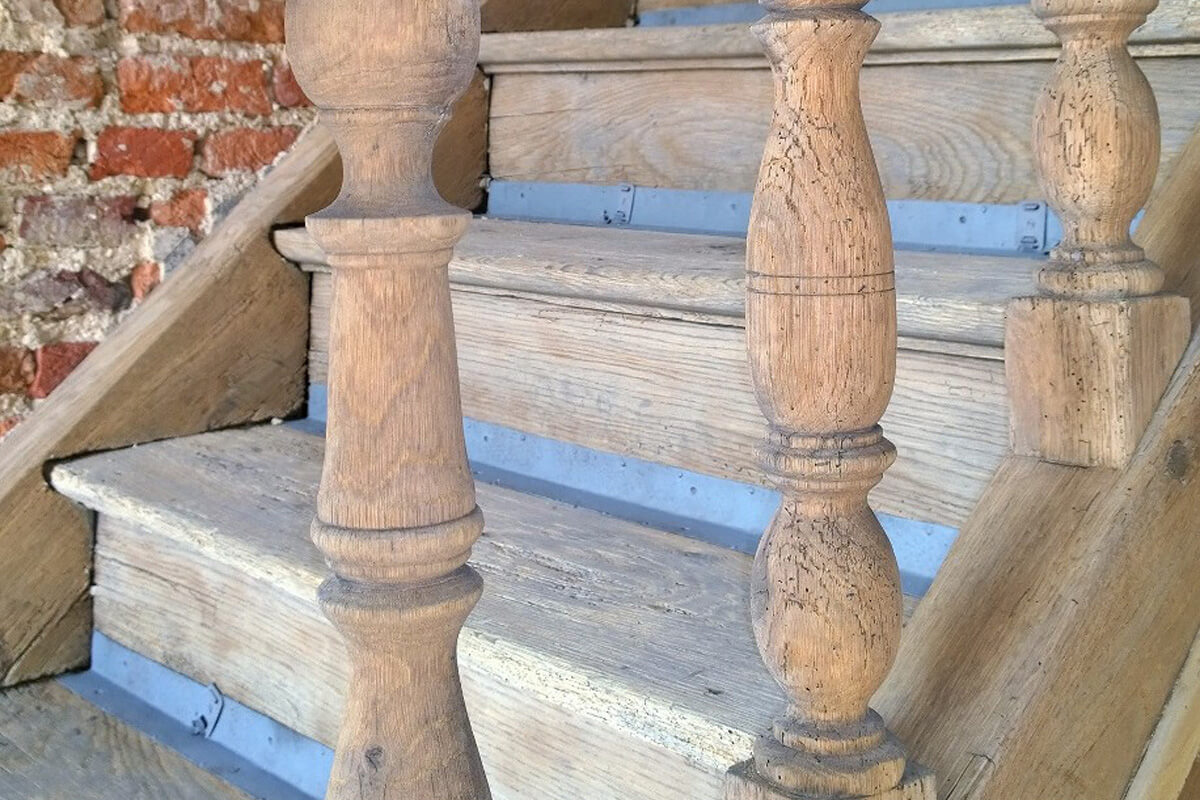
 | Checklist: Is your staircase still safe?Check this list:
Do you have one or more ticks? |
When does your staircase need restoration? (recognise the signs)A staircase that requires restoration always shows signs. The sooner you notice damage, the lower the risk of further weakening. Most common signs of damage:
Protector conducts a full activity test during inspection. |
Our thorough diagnosis: the foundation of every professional restorationDurable restoration always begins with a comprehensive inspection by our specialists. What does our expert examine during the analysis?
|
Our restoration method (full step-by-step process)
Restoring an authentic staircase is a specialist task. We combine craftsmanship, modern techniques, and maximum care for your home.
1. Stabilising and securing
We ensure that your staircase can be safely dismantled without risk of further damage.
- Reinforcement with temporary supports
- Securing loose elements
- Protecting walls, floors and plasterwork
2. Measuring all components
Our specialists measure:
- All steps in their original geometry
- Landings
- Nosing profiles
- Balusters and stringers
- Any ornaments and decorative elements
These measurements are essential to ensure new parts fit perfectly.
3. Dismantling steps and balusters
We carefully remove:
- Loose steps
- Damaged risers
- Compromised balusters
- Weakened stringers
During full dismantling, we take every precaution to protect plasterwork.
4. Creating new stair components to measure
In our workshop, we produce perfectly fitting reproductions of:
- Steps
- Risers
- Stringers
- Handrails
- Decorative elements
This is done using wood types selected by Protector to match the original character of your staircase.
5. Installation and fine-tuning
We reinstall all new and restored components in your home:
- Perfect alignment
- Tight joints
- Deflection checks
- Finishing according to the style of the house
6. Restoring walls and plasterwork
- Cracks
- Flaking pieces
- Open joints
- Peeling finishes
7. The final result
A fully restored, safe, and authentic staircase that will last for decades.
Restoration for fungal, woodworm and severe damage
Protector has unique expertise in biological damage repair. This makes us one of the few companies that address both the staircase and the cause of the damage.
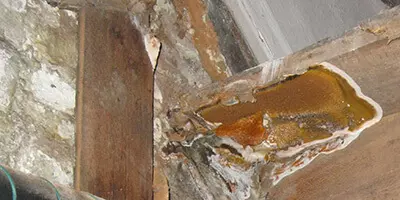
Fungus in the staircaseWe apply a professional fungal treatment consisting of:
|
Woodworm in steps or balustersOur approach:
|
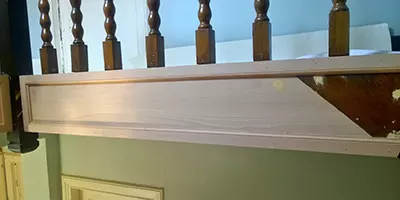
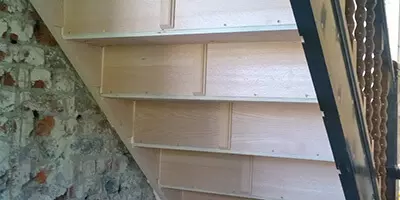
Structural damageFor unstable staircases:
|
Protector operates throughout Belgium
|
![Map of Belgium with the cities where Protector has offices [NOTE: place names on the map are in French, even on NL pages]](/images/protector-kantoren-kaart-fr.png "Map of Belgium with the cities where Protector has offices [NOTE: place names on the map are in French, even on NL pages]")
Typical staircase issues per province
Antwerp
Many townhouses with elegant oak staircases.
Brussels
Fungal damage is common due to older cellars.
East Flanders
Many renovations in terraced houses with enclosed staircases.
West Flanders
Frequent woodworm in older coastal houses.
Flemish Brabant / Limburg
Often a combination of structural damage and wear
Namur / Hainaut / Walloon Brabant
Wide variety of classic homes.
How much does staircase restoration cost? (indicative prices)Professional staircase restoration depends on:
| 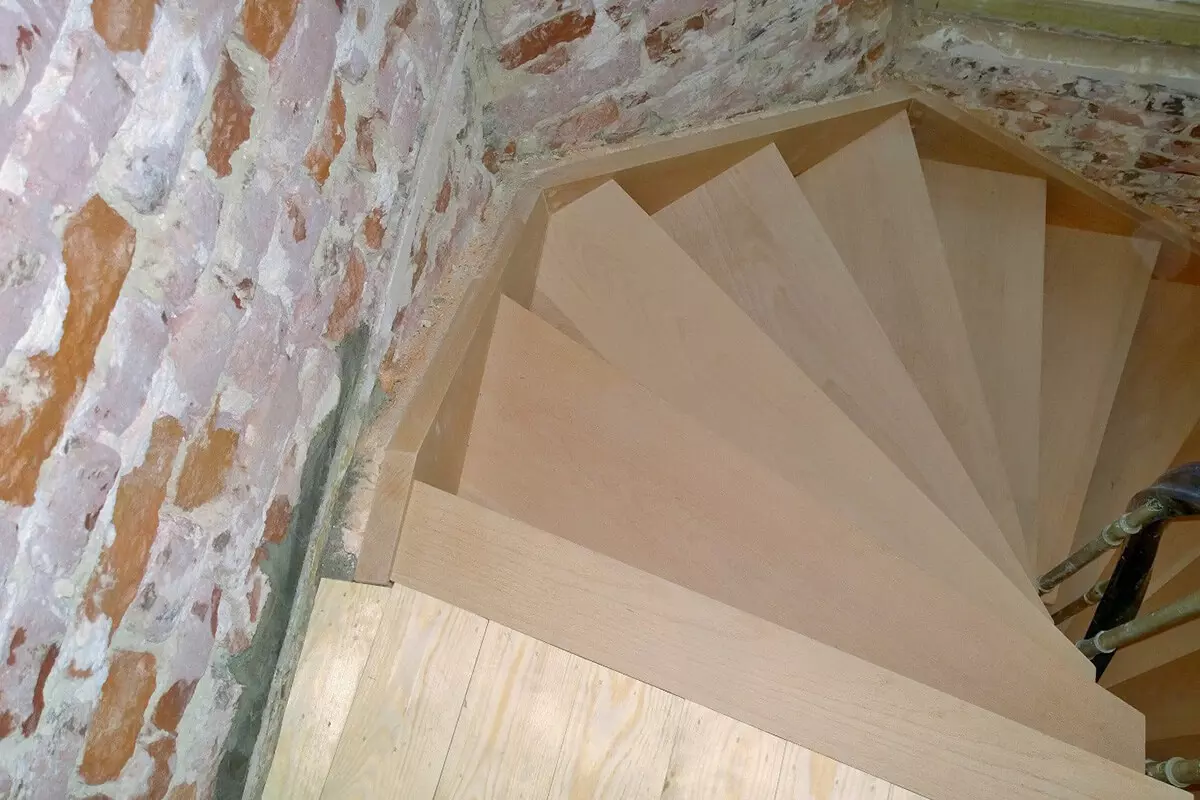 |
Why choose Protector?
|
Ready for a safe and beautiful staircase?Request our advice or book an appointment with one of our regional experts. |
Staircase restoration: answers to the most frequently asked questions
How exactly is a wooden staircase restored?
A professional staircase restoration always begins with a technical diagnosis on site. Our specialist checks the stability of the entire structure, the condition of the wood, possible fungal or woodworm damage, and any damage caused by previous renovations. You will then receive a clear overview of the recommended restoration techniques, the planned work sequence, the expected duration, and the cost estimate. After this, we proceed with measuring, dismantling damaged parts, and producing new custom-made staircase components in our own workshop. All parts are reinstalled in the original style, details are finished, and surrounding plasterwork is restored. This ensures a structurally safe, authentic, and durable staircase that fits perfectly within your home.
When is restoration necessary and when is renovation sufficient?
Renovation mainly focuses on the visual aspect of the staircase: new coverings, new steps, or a modern look. Restoration is required when the structure itself is weakened by age, wear, woodworm, fungus, or damage from renovations. Signs include sagging steps, play in joints, woodworm holes, musty smell, or loose components. In these cases, the staircase must be restored to ensure safety, stability, and longevity. Protector first analyses the cause of the damage to determine whether renovation is sufficient or full restoration is necessary.
How much does it cost to restore a staircase?
The cost depends on the severity and type of damage, the complexity of the staircase, the wood type, the number of parts to be reproduced, and any biological damage such as fungus or woodworm. During the diagnosis, you will receive a fully transparent quote, including techniques, materials, and a clear time estimate. This ensures you know exactly what the restoration entails and the required investment. Minor restorations are less expensive, while complex or severely damaged staircases require a higher budget.
Can fungus or woodworm be completely removed from a staircase?
Yes, but only if the restoration is thorough and technically correct. Fungus and woodworm often affect not only the steps but also stringers, joints, risers, and surrounding woodwork. Protector removes all affected parts, treats healthy wood with professional anti-fungal or anti-woodworm techniques, and reconstructs weakened components to measure. We also analyse underlying moisture problems that cause fungus, ensuring the damage does not recur. This combination of treatment and reconstruction fully and sustainably resolves biological damage.
Does my staircase need to be fully dismantled during restoration?
Not always. Minor damage can often be repaired without major dismantling. However, if stringers, joints, or steps are structurally weakened, or if fungus is present, partial or full dismantling is necessary to restore the staircase safely and durably. In such cases, we protect walls, floors, and plasterwork to the maximum. Before work begins, we clearly inform you about accessibility, scheduling, and the impact of the works.