

 | How to recognise damaged beam ends?The following symptoms almost always indicate damage in or around the beam end: Visual signs
Technical symptoms
If you notice one or more symptoms, it is best to have a professional inspection carried out. Protector offers a complete diagnosis of the beam ends and the supporting wall. |
What are beam ends and why do they get damaged?
Beam ends are the ends of wooden load-bearing beams anchored into the wall. They bear enormous forces: the weight of the roof, floors, and sometimes even an entire story. When a beam end is damaged, the entire beam loses its load-bearing capacity.
Causes of deteriorationThe most common causes:
| Why beam-end rot is so dangerousAffected beam ends:
The longer you wait, the more extensive and expensive the repair. |
When should you take action?Immediate action
In these situations, rapid intervention is essential. Early intervention
Early intervention significantly reduces costs.
|  |
Our professional approach to beam-end restoration
At Protector, we combine restoration techniques with structural expertise. Our method is designed to provide maximum stability, aesthetic repair, and long-lasting protection.
Below you will find our complete process.
1. Inspection & Diagnosis
A correct diagnosis is crucial. Our expert carries out:
- visual inspection of the beam, wall, and surrounding areas
- measurement of wood moisture content
- inspection for woodworm activity
- tracing fungal threads and fruiting bodies
- checking load / deflection
- test drillings where necessary
- photographs and reporting
The inspection usually takes 60–90 minutes, depending on accessibility. Result: a clear report with
- degree of damage
- repair scenario
- cost estimate
- any additional treatments (fungus, moisture, woodworm)
2. Sawing out damaged sections
The rotten or affected segment is completely removed. This ensures that no part of the weakened wood remains in contact with the new structure. We work in a low-dust, safe manner, protecting the surroundings.
3. Rebuilding with a new beam end
Depending on the situation, we choose:
1. Classic wooden restoration
- selecting a wood type with similar structure
- careful cutting and fitting
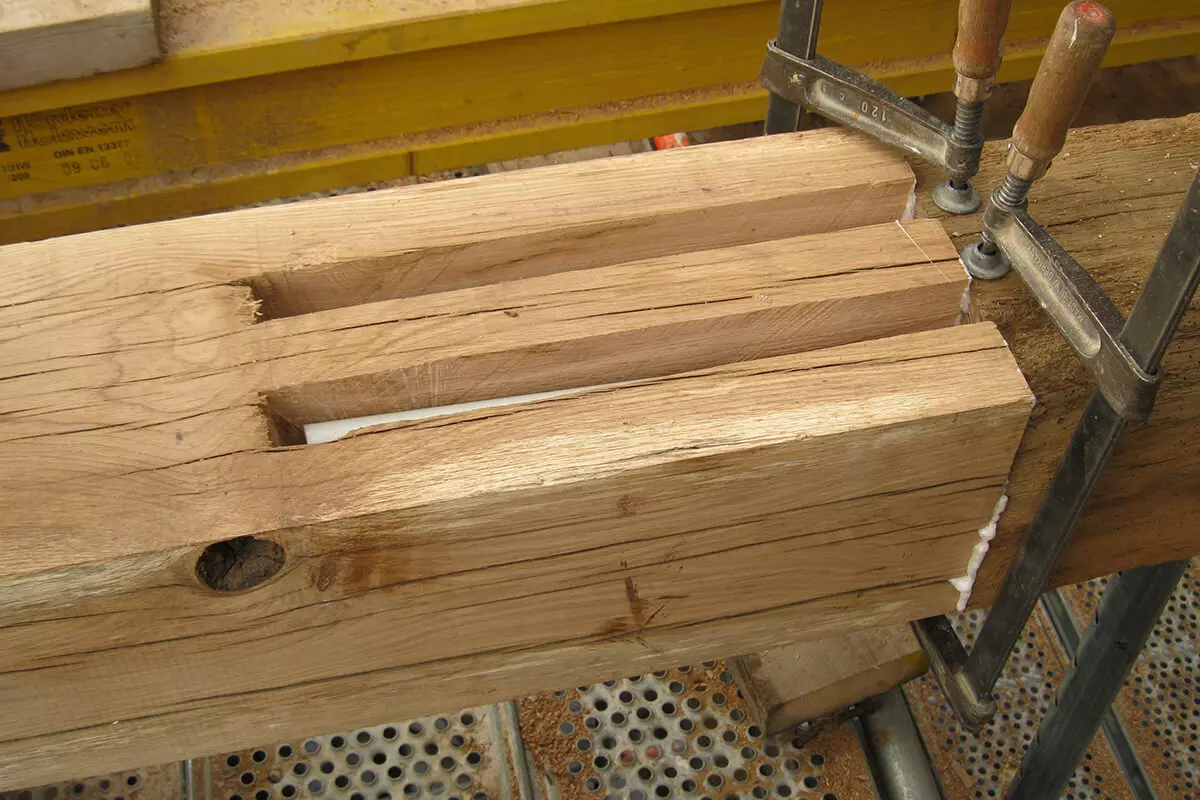
- joining using mortise and tenon, dowels, or mechanical connections
- reconstruction of original load-bearing capacity
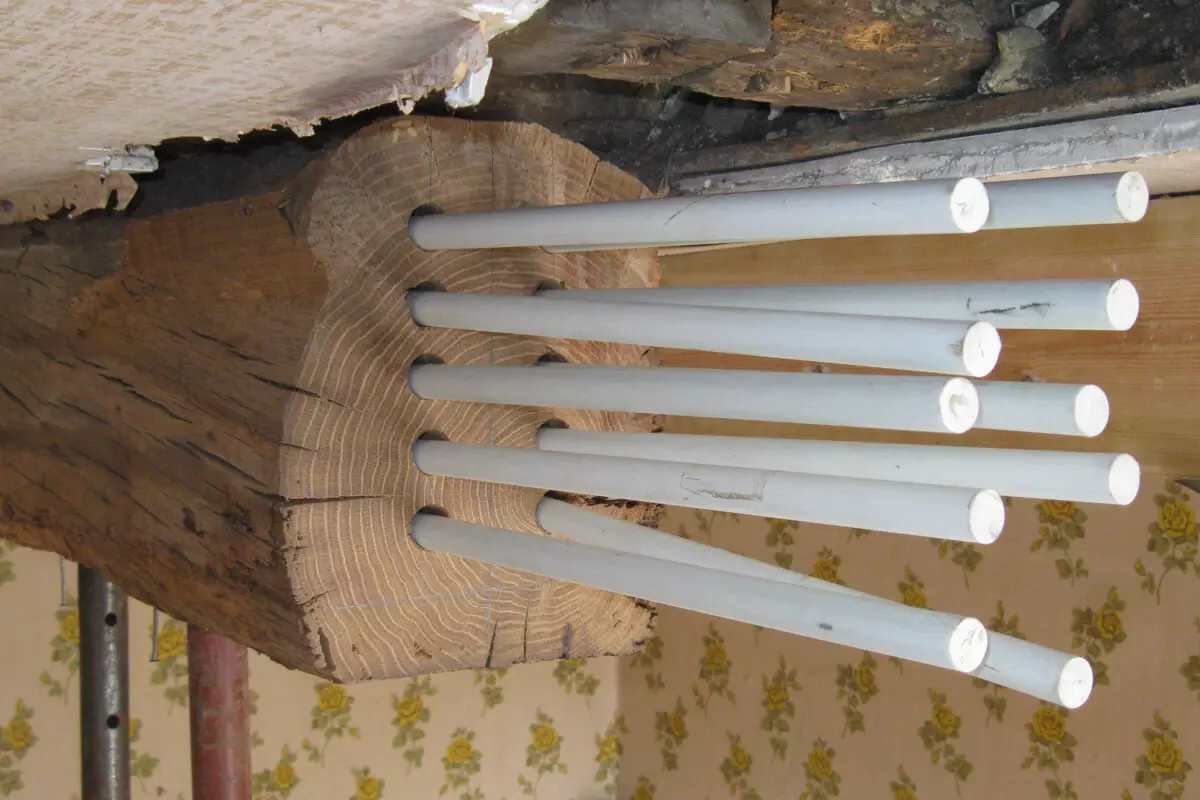
2. Polymer-chemical restoration (Epoxy / Resin)
Usually applied when the rest of the beam is in good condition.
Benefits:
- perfect alignment with original beam
- high compressive strength
- resistant to moisture
- long lifespan
- minimal impact on surroundings
We use resin systems compliant with recognised standards.
3. Hybrid restoration
Classic wooden reconstruction combined with resin reinforcement for stability and historical authenticity.
4. Treatment against moisture, fungus, and woodworm
You receive advice on:
- ventilation
- moisture control
- maintenance
- monitoring risk zones
Protector optionally offers a warranty period.
5. Quality control & handover
At the end of the work:
- we re-measure the moisture content
- check load, stability, and connection
- all joints are tested for strength
- you receive an overview of the work performed
If applicable, you receive a warranty certificate on treatment and stability.
 | Cost of repairing beam endsIn Belgium, the cost of beam-end renovation varies depending on accessibility, degree of damage, and the chosen method. What influences the total price?
|
Protector operates throughout Belgium
|
![Map of Belgium with the cities where Protector has offices [NOTE: place names on the map are in French, even on NL pages]](/images/protector-kantoren-kaart-fr.png "Map of Belgium with the cities where Protector has offices [NOTE: place names on the map are in French, even on NL pages]")
Why choose Protector?
|
Ready for a professional restoration of your beam ends?Don’t wait until minor damage causes major problems. |
Answers to your questions about beam ends
How can I tell if my beam ends urgently need repair?
Damaged beam ends usually reveal themselves through a combination of visible and less visible signs. You may notice cracks in the wall at the level of the supporting beams, sagging ceilings, or moisture spots around the beam openings. Technically, the wood moisture content and load-bearing capacity may be greatly reduced. Woodworm leaves drillings behind, while fungus causes typical discoloration, mustiness, and soft spots. A beam end that sounds hollow when tapped is also suspicious. Because the damage often extends beyond what is visible, we recommend a professional inspection as soon as you notice any of these symptoms. This prevents small problems from escalating into structural instability.
Is beam-end restoration as reliable as full beam replacement?
Yes. With a professional approach, beam-end restoration can be just as reliable as full replacement — and often even more durable. Modern methods like epoxy reinforcement and polymer-chemical restorations provide exceptional compressive strength and form a seamless connection with the healthy part of the beam. When classic wooden restoration is more appropriate, we select wood that matches the existing material exactly. The result is a stable, structurally strong beam that can last for many decades. The choice between restoration or replacement mainly depends on the degree of damage, but in more than 80% of cases, restoration is perfectly feasible and economically advantageous.
What happens during the inspection of my beam ends?
During a professional inspection, our experts analyse the full condition of the beam end and the surrounding structure. We measure the wood moisture content, check for woodworm activity, and look for fungal threads or fruiting bodies. If necessary, we perform test drillings to assess the inner core. The load-bearing capacity, deflection, and anchoring of the beam are examined, as well as any damage to adjacent walls. This inspection typically takes 60–90 minutes and results in a clear report with a diagnosis, repair proposal, and cost estimate. You know exactly where you stand and which steps are needed to make your home safe again.
How much does it cost to repair beam ends?
The cost of beam-end restoration using polymer-chemical solutions depends on several factors: the degree of damage, the chosen approach, the accessibility of the beam, and any additional treatments such as fungus or woodworm control. The exact price is always determined after a professional inspection, as every situation is unique. Thanks to our experience, we can often avoid a full beam replacement, which would be considerably more expensive. With a free, non-binding quote, you quickly get a clear picture of the total cost.
Can beam rot stop on its own if the wood dries out?
Unfortunately not. Once wood rot or fungal attack has begun, the process continues even when superficial moisture problems disappear. The fungi or bacteria remain active in the deeper wood layers. Moreover, a damaged beam end permanently loses its structure, reducing load-bearing capacity irreversibly. Woodworm also does not stop on its own: larvae can feed for years. Only a professional treatment completely halts the process. That is why timely intervention is essential. The earlier the treatment, the less the damage and the lower the cost.
How quickly can you come for an inspection?
We understand that beam-end problems can be urgent. Protector works with regional teams, so in most provinces, an inspection can be carried out within 48–72 hours. In cases of acute danger, severe deflection, active fungus, large cracks, or risk of collapse, we try to respond even faster. Thanks to our presence in all Flemish provinces, Brussels, Wallonia, and Luxembourg, we have an extensive network of experienced restorers. During your contact, we immediately assess urgency and schedule the earliest possible date. Rapid intervention prevents much additional damage and costs.
What happens if multiple beam ends are affected at the same time?
When multiple beam ends in a building are affected, we prepare a full stability plan. First, we map the degree of damage for each beam through moisture measurements, test drillings, and structural analysis. Then we determine whether the beams need temporary shoring to prevent further subsidence. Afterwards, we repair the beam ends one by one or in groups, depending on the load zone. Often, we combine classic wooden restoration with resin reinforcement to restore the original load-bearing capacity. You receive a clear overview of all steps, the duration, and the cost for the entire process.