

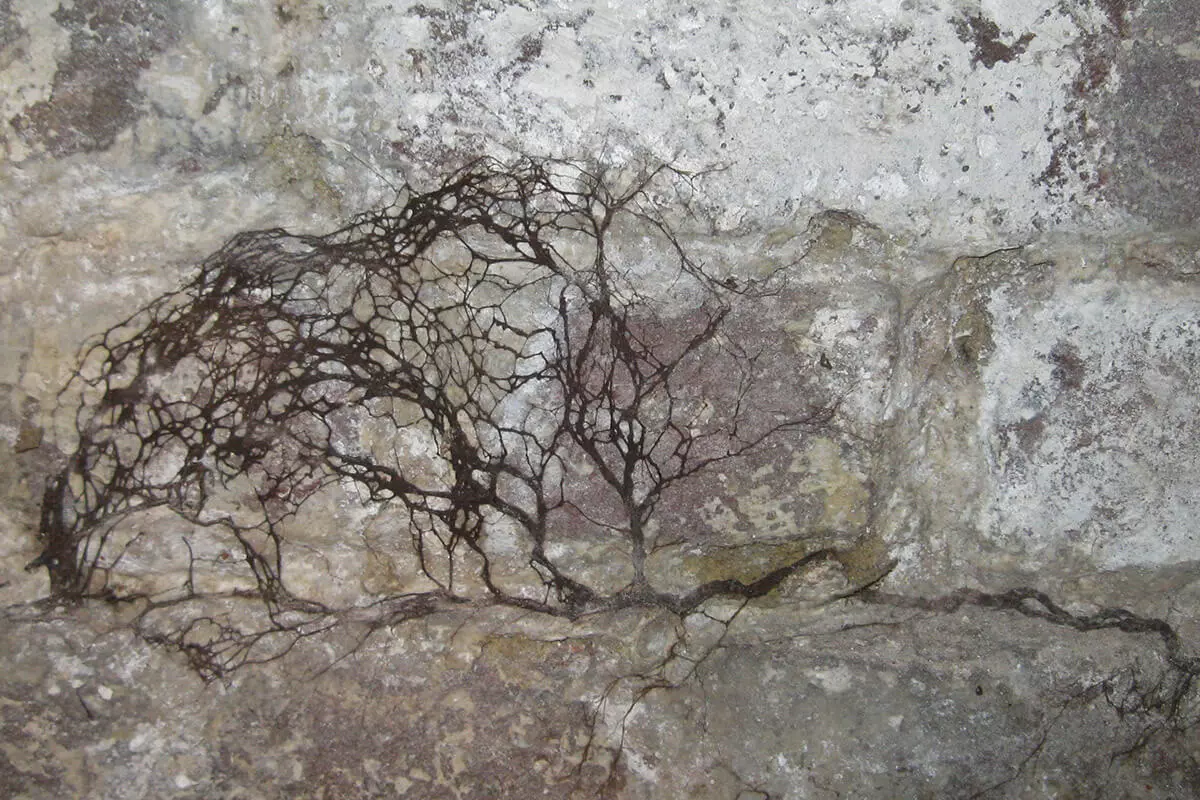
 | What is cellar fungus (Coniophora puteana)?Cellar fungus is a brown rot fungus capable of breaking down the cellulose in wood, causing the wood to lose its strength and durability. The result: wood that was once strong and load-bearing turns into a spongy, dark brown, brittle mass that crumbles under light pressure. How does cellar fungus develop?Cellar fungus emerges and grows in conditions where three elements are present:
When the moisture content in wood rises to around 50–60%, cellar fungus finds ideal living conditions. It forms mycelium, penetrates the wood, spreads to other structures, and eventually develops a fruiting body capable of releasing spores. |
Why does cellar fungus mainly grow in damp areas?
This fungus depends on water. Unlike dry rot, cellar fungus cannot bore through masonry but can crawl over walls and stone surfaces if sufficient moisture is present.
Typical moisture sources:
- a leaking pipe
- rising damp
- rainwater infiltration
- condensation
- poor ventilation in crawl spaces, cellars, or technical rooms
Difference between cellar fungus and dry rot
| Feature | Cellar Fungus | Dry Rot |
|---|---|---|
| Scientific name | Coniophora puteana | Serpula lacrymans |
| Grows... | only on very damp wood | on wood and through walls |
| Growth rate | slower | very fast |
| Risk | serious | extremely serious |
| Fruiting body | dark green to olive | reddish-brown with white edge |
Although cellar fungus grows more slowly than dry rot, the eventual damage can be equally severe.
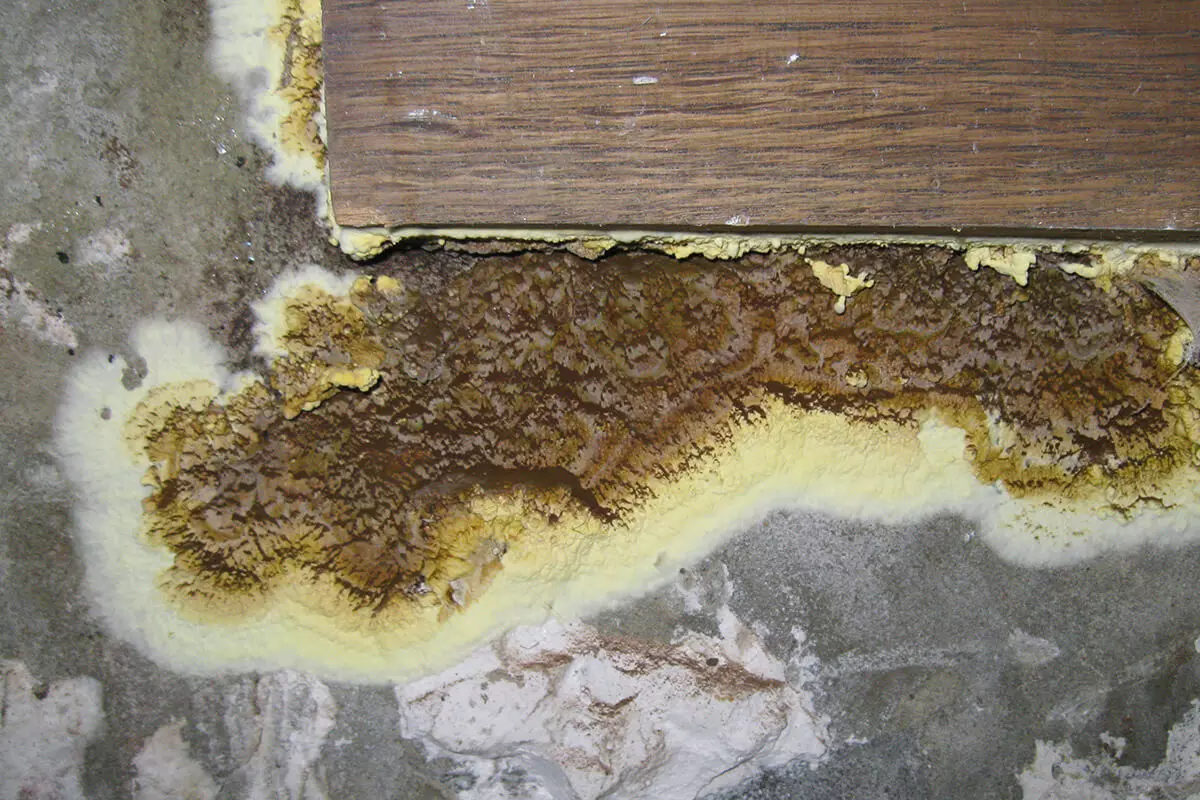
How to recognise cellar fungus?Recognising cellar fungus in time can prevent thousands of euros in damage. Use the checklist below. Visible characteristicsCellar fungus may appear as:
Checklist: Do I have cellar fungus?You are highly likely to have cellar fungus if you recognise at least 2 of the following symptoms:
If you see one or more of these signs, call a specialist for an inspection. |
Risks & damage caused by cellar fungusCellar fungus is not just an aesthetic issue but a structural problem. Wood rot & collapse riskAs cellar fungus breaks down cellulose, wood loses:
A wooden floor or beam structure that was perfect 10 years ago can literally sag today. Spread to other areasCellar fungus can spread through:
Although it does not bore through masonry like dry rot, it can easily spread via skirting boards, cupboards, panelling, and floor joists. Health risksFungi often produce spores that can:
|  |
Causes of cellar fungusWood moisture content: 50–60%Cellar fungus thrives in very wet conditions. That’s why it is mainly found in:
Water infiltrationOne of the most common causes.
Condensation and cold bridgesModern homes are often airtight, leading to condensation on cold surfaces. Typical Belgian risk properties
|
How is a professional cellar fungus treatment carried out?
A professional treatment ensures the fungus is completely and permanently removed.
Here is the full Protector process.
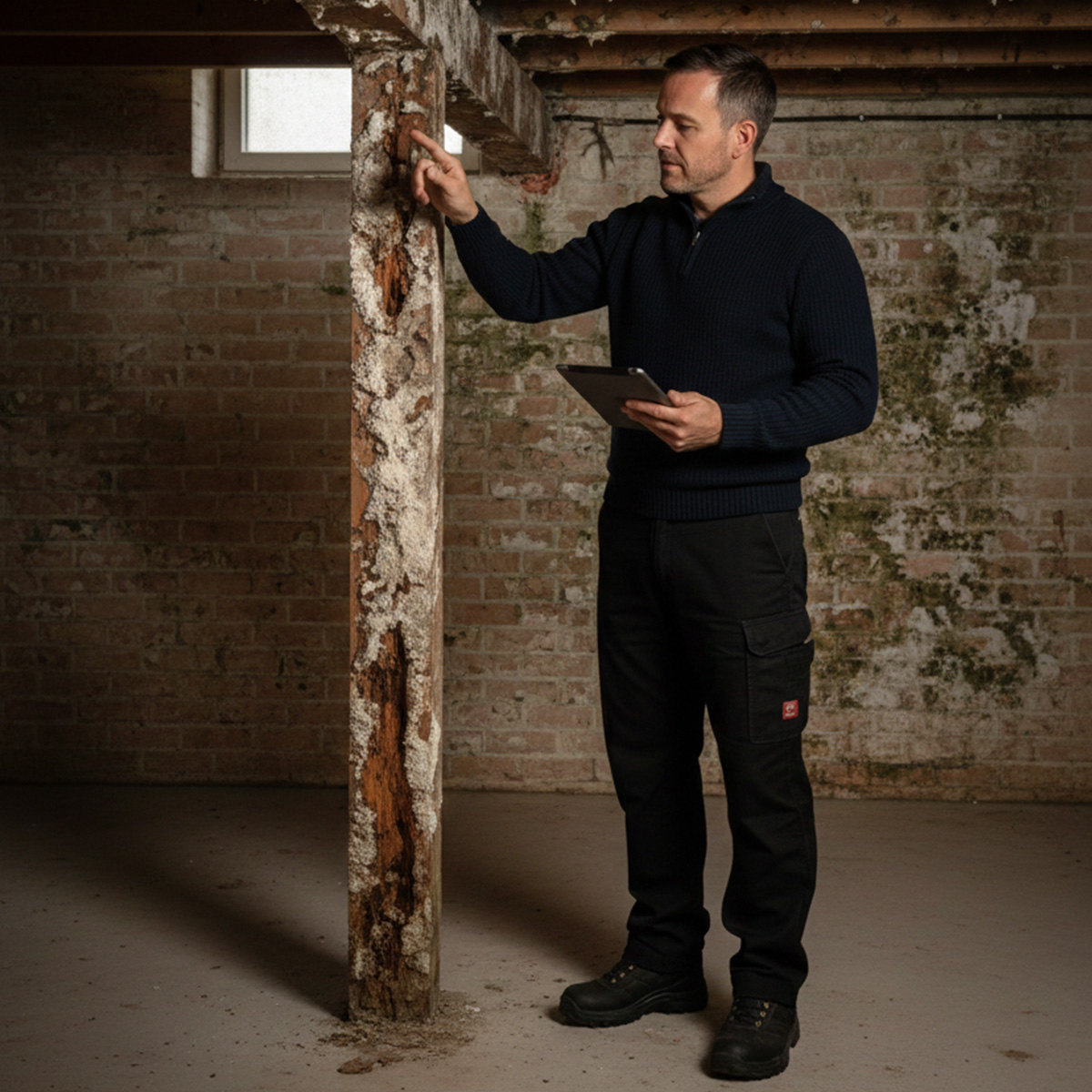
1. Diagnosis & Inspection
An expert visits the site for a thorough analysis of:
- the source of moisture
- the extent of the fungus
- the structure of the affected wood
- risks for other areas
2. Eliminate the cause of moisture
No treatment makes sense while moisture persists.
Protector first addresses the cause, such as:
- repairing leaks
- solving infiltration
- improving ventilation
- treating rising damp
- cellar sealing if necessary
3. Remove affected wood
All contaminated areas are removed until only healthy wood remains.
Protector also checks:
- hidden wood behind plasterwork
- floor joists in contact with walls
- skirting boards and panelling
- subfloors
4. Intensive deep cleaning
All structures that came into contact with cellar fungus are thoroughly cleaned.
5. Chemical treatment
We treat all surfaces with an appropriate cellar fungus control agent.
6. Wood replacement & aftercare
Damaged wood is replaced with new wood that:
- has been pre-treated against fungi,
- is properly dried,
- is protected according to Protector’s strict quality standards.
7. Finishing & restoration
Protector also carries out all additional work:
- restore plasterwork
- repair joinery
- refinish surfaces
Prevention of cellar fungus
1. Moisture controlrepair leaks 2. Ventilation
| 3. Regular inspection
4. Risk zones per property type
|
 | Price of cellar fungus treatmentThe price depends on:
Subsidies may be available if linked to moisture solutions (e.g., grant via Fluvius). |
Protector operates throughout Belgium
|
![Map of Belgium with the cities where Protector has offices [NOTE: place names on the map are in French, even on NL pages]](/images/protector-kantoren-kaart-fr.png "Map of Belgium with the cities where Protector has offices [NOTE: place names on the map are in French, even on NL pages]")
Why choose Protector?
|
Ready to remove cellar fungus permanently?Protector is ready with a certified team, years of experience, and proven techniques to make your home safe, dry, and healthy again. |
Recognising, treating & preventing cellar fungus: answers to the most common questions
How do I recognise cellar fungus at an early stage?
Cellar fungus usually starts subtly, so many owners notice damage only late. At the early stage, you mainly see pale to dark brown, fan-shaped threads on or around damp wood. A musty, damp smell often indicates early fungal growth. Wood that darkens quickly or gives way under light pressure is an important warning sign. Spots or unusual discoloration on skirting boards, beams, or floorboards can also indicate cellar fungus. The sooner you recognise these signs, the lower the risk of structural damage and the easier the treatment will be.
Can cellar fungus spread to other areas?
Yes. Although cellar fungus is less aggressive than dry rot, it can spread through damp wood, skirting boards, subfloors, and structures in contact with infected material. It easily adheres to surfaces with sufficient moisture and can grow ‘over’ walls, floors, and metal structures. The greatest risk is often in hidden areas, such as behind plasterwork or in crawl spaces. This is why a specialist inspects both visible and non-visible parts of the property. Quick action prevents further spread and additional damage.
Is cellar fungus dangerous for my health?
Cellar fungus itself is not toxic, but as with most fungi, spores can affect air quality. People with allergies, asthma, or sensitive respiratory systems may experience irritation or breathing issues. The greater danger, however, comes from the structural damage cellar fungus causes: weakened beams, floorboards, and load-bearing structures can become unstable. This can create a potentially dangerous situation, especially if the infestation has been present for some time. Professional removal and restoration are therefore essential for a safe and healthy home.
How is a professional cellar fungus treatment carried out?
A professional treatment begins with a thorough diagnosis lasting 30 to 60 minutes. Once the moisture causes are resolved by a plumber or contractor, the specialist removes all affected wood until only healthy wood remains. All surfaces that came into contact with the fungus are then intensively cleaned and treated with a cellar fungus control agent. Affected beams, floors, or structures are replaced with new, pre-treated wood. Finally, everything is neatly finished so your home is safe, stable, and completely fungus-free.
How quickly can I have cellar fungus removed?
The speed depends on the severity of the infestation, but Protector can usually dispatch an expert quickly for a diagnosis. After the inspection, a detailed treatment plan is prepared. The actual treatment usually takes 2 to 5 days, depending on the amount of affected wood and necessary restoration work. Since Protector specialises in working within occupied homes, disruption is minimal and all areas are carefully shielded, allowing the treatment to take place without having to vacate your home.
Will cellar fungus return after treatment?
When the treatment is correctly executed and the moisture source fully resolved, cellar fungus should not return. The key factor is permanently addressing the source: leaks, condensation, or infiltration must be completely remedied. Protector not only removes the fungus but also tackles the underlying cause and uses techniques that prevent re-infestation. Additionally, affected wood is replaced with pre-treated wood. Periodic inspections by the homeowner help detect new moisture problems early.
How much does it cost to have cellar fungus professionally removed?
The cost of cellar fungus treatment depends on the extent of the infestation, accessibility, the amount of wood to be replaced, and required restoration work. Protector always provides a transparent, tailored quote, including cause treatment, fungus removal, wood replacement, and finishing. In some cases, subsidies are available, especially if the cause is moisture-related. This gives you a clear, complete picture of the total cost and what to expect.