

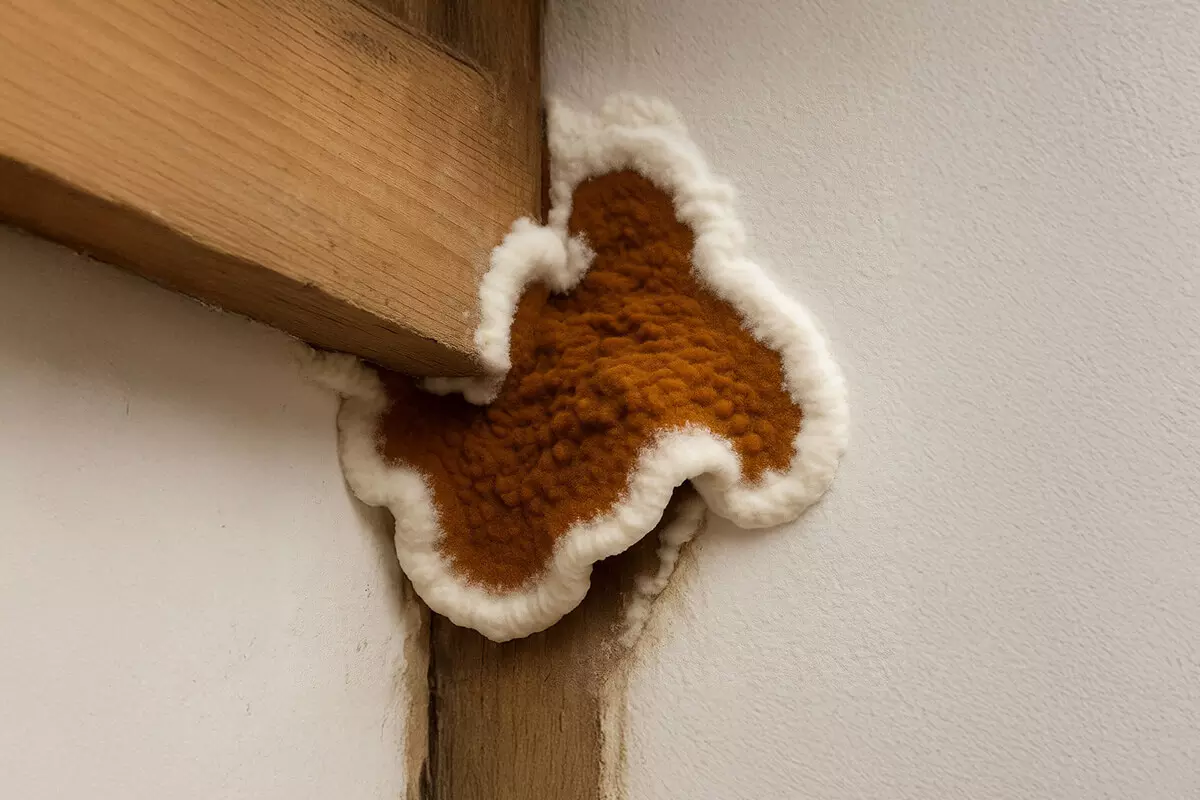
 | What is dry rot and why is it so dangerous?Dry rot, also known as Serpula lacrymans, is one of the most aggressive wood-destroying fungi in Europe. It grows rapidly, actively searches for moisture sources, and destroys not only weakened timber but also perfectly healthy wood. Why dry rot poses such a serious risk
Many properties face hidden damp problems, which is exactly where dry rot thrives. |
How to recognise dry rot in your property
Symptoms often only appear once the infestation is advanced. The sooner you identify it, the faster we can intervene.
Typical signs of dry rot
- Rust-coloured powder layer (spores) on floors and timber.
- White, cotton-like mycelium threads crawling through gaps, joints or masonry.
- Fruiting bodies, large rust-coloured fungal patches with white margins.
- Wood breaking into cubes or crumbling into fibres.
- Musty, damp smell in basements, crawl spaces, lofts or behind wall coverings.
- Warped, discoloured or soft wood that breaks easily.
- Dull sound when tapping affected wood.
If you see or smell any of these signs, a professional inspection is essential.
How quickly should you respond to dry rot?Dry rot never disappears on its own. Once active, the infestation progresses faster than most people realise.
Therefore, we advise contacting us within 48 hours for an inspection if you suspect dry rot. | 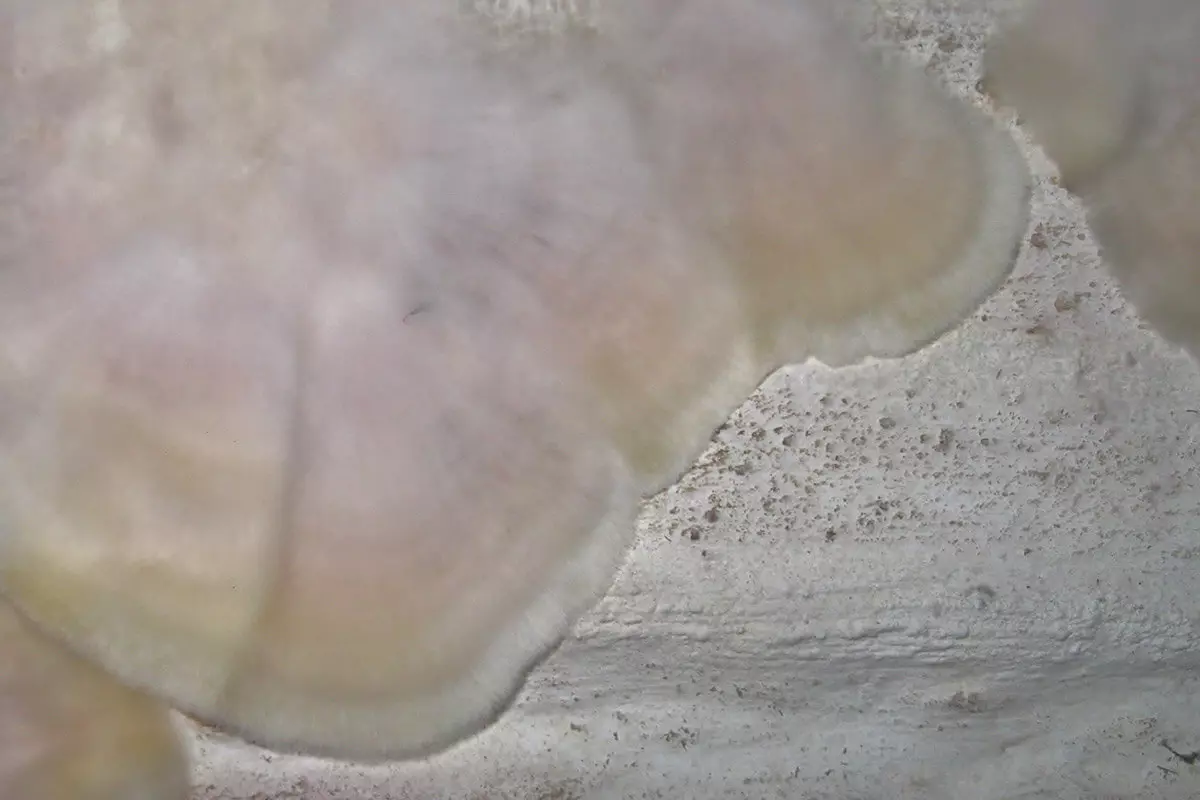 |
Professional inspection: how we examine your property
A correct diagnosis is crucial to prevent reinfestation. Protector carries out a thorough inspection using specialised techniques.
What does our expert check?
1. Type of fungus
Not every mould is dry rot. We distinguish dry rot, wet rot, polypore fungi and other wood-destroying species. Treatment varies depending on the type.
2. Extent of the infestation
We examine visible and hidden timber, skirting boards, floors, beam ends and surrounding materials.
3. Source of moisture
Leaking pipes, rising damp, condensation, roof leaks or cold bridges may be the underlying cause.
4. Risk of structural damage
We assess beams, floorboards and load-bearing structures.
5. Potential insurance involvement
Your home insurance often covers damage caused by covered moisture issues. We review which costs may qualify together.
Duration of an inspection
Our dry rot inspection typically lasts 60–90 minutes, depending on accessibility and property size.
How do we remove dry rot permanently? Step-by-step
Our treatment follows the guidelines of building expertise and complies with technical recommendations for timber and fungal remediation.
1. Cause analysis and moisture problem resolution
Dry rot never develops without a moisture source.
We always start by permanently resolving the problem:
- broken supply pipe
- leaking gutter
- rising damp
- cracked drain
- poor ventilation
Only once the cause is addressed will treatment be fully effective.
2. Removal of affected timber
All infected timber is removed beyond the infected zone.
This often includes:
- floorboards
- load-bearing floor timbers
- beam ends
- subfloors
- skirting boards
- battens
- timber joinery
Hidden timber behind plaster or insulation is also checked and removed if infested.
3. Intensive deep cleaning of the affected area
All surfaces in contact with the fungus are thoroughly cleaned:
- masonry
- joints
- concrete
- plaster
- metal components
- pipes
Goal: completely eliminate all remaining spores, hyphae or mycelium structures.
4. Injection and impregnation with professional fungicide
A certified anti-fungal product is applied via:
- masonry injection
- surface treatment of all affected areas
- deep impregnation of timber components
The product type depends on the diagnosis and is tailored by Protector.
5. Replacement with treated timber
All removed timber is replaced with:
- new timber
- pre-treated against fungi and insects
- meeting national standards
This prevents reinfestation.
6. Finishing and restoration
Protector delivers a complete solution:
- plaster restoration
- floor reinstatement
- additional moisture treatment if necessary
- reinforcement of structural elements
- finishing level according to client agreement
Once we leave, your property is safe and habitable again.
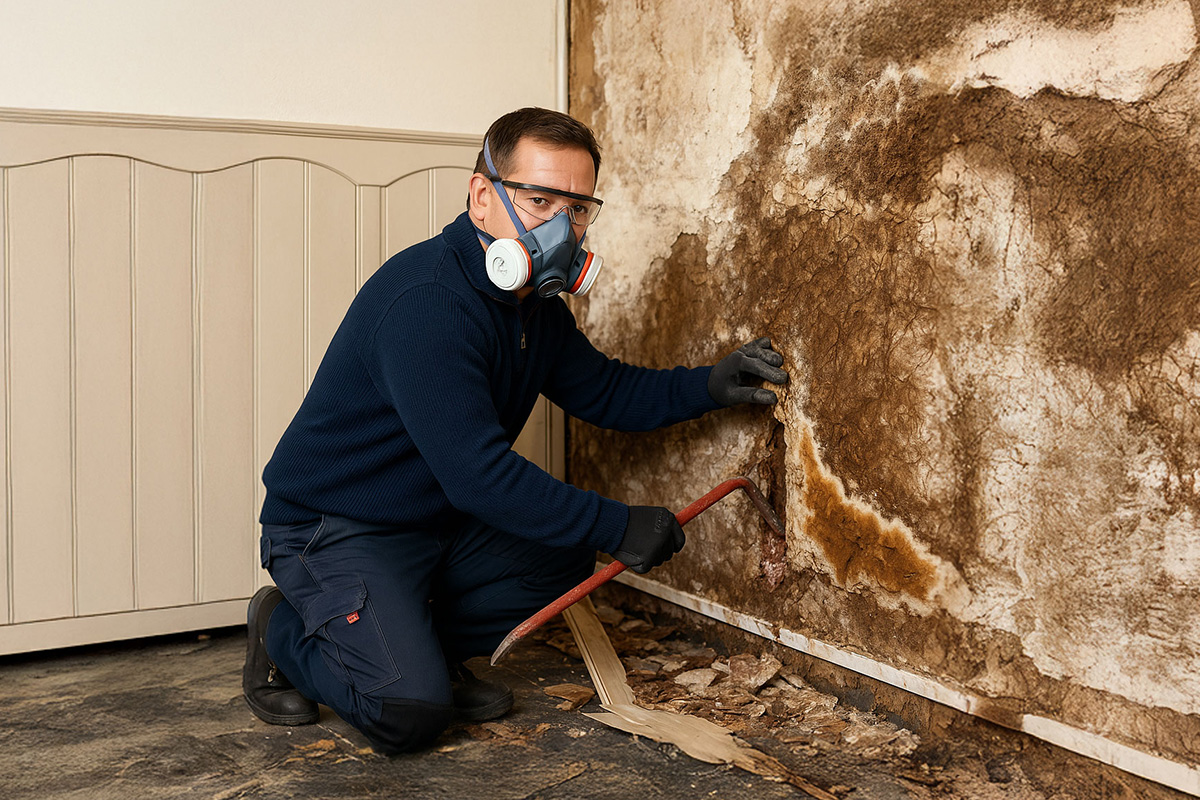 | How much does dry rot removal cost? (indicative)The cost of professional dry rot treatment depends on:
We always provide a free quote with clear details of:
|
Protector operates throughout Belgium
|
![Map of Belgium with the cities where Protector has offices [NOTE: place names on the map are in French, even on NL pages]](/images/protector-kantoren-kaart-fr.png "Map of Belgium with the cities where Protector has offices [NOTE: place names on the map are in French, even on NL pages]")
Prevention: how to avoid new dry rotAlthough proper treatment solves the problem completely, prevention remains important. Tips to keep your property free from dry rot
Protector can assist with a preventative inspection (optional). |
Why choose Protector?
|
Ready to remove dry rot permanently?
Protector is ready with a certified team, years of experience and proven techniques to make your property safe, dry and healthy again.
Dry rot treatment: answers to frequently asked questions
What exactly is dry rot and how dangerous is it for my property?
Dry rot, also known as Serpula lacrymans, is the most aggressive wood-destroying fungus in Belgian properties. It attacks both weakened and healthy timber, causing beams, floors and structures to rapidly lose strength. The fungus grows through masonry, spreads via mycelium strands, and can draw moisture from stone, making drying ineffective. Because dry rot often remains hidden until severe damage has occurred, it poses a serious risk to structural stability. In extreme cases, structural collapse may occur. Rapid professional intervention prevents further spread and saves significant repair costs.
How can I recognise dry rot and distinguish it from other fungi?
Dry rot produces clear symptoms: a rust-coloured powder (spores), white cotton-like mycelium threads spreading through gaps and masonry, and rust-brown fruiting bodies with a white rim. Affected timber becomes soft, brittle and sometimes breaks into cubes. A musty, damp smell is also typical. These features may resemble other fungi such as wet rot or polypore fungi. As each species requires a different treatment, professional diagnosis is the only way to confirm the type of fungus.
What causes dry rot and can it be prevented?
Dry rot only develops under damp conditions. Leaking pipes, damaged gutters, rising damp, condensation problems or poor ventilation create the ideal environment. The fungus thrives in spaces with stable temperatures, such as basements, crawl spaces or unventilated rooms. Prevention includes addressing moisture issues promptly, ensuring adequate ventilation, and keeping timber dry. Annual inspection of critical areas like floor joists and beam ends helps detect early infestation. Immediate action is essential at the first sign.
How does a professional dry rot inspection work?
During a professional inspection, the specialist identifies the type of fungus and assesses the extent of the infestation. Both visible and hidden timber is examined, including areas behind plaster, under floors and around beam ends. The moisture source is traced, since treatment is ineffective without resolving it. Structural risks are also evaluated. An inspection typically lasts 60–90 minutes, depending on accessibility and size. Afterward, you receive a clear diagnosis and tailored recommendations.
How is dry rot removed permanently by professionals?
Professional removal follows a proven step-by-step plan. First, the underlying moisture problem is resolved. Next, all infected timber is removed beyond the affected zones. Masonry, plaster and adjoining materials are thoroughly cleaned, followed by injection and surface treatment with certified fungicide. Finally, new pre-treated timber is installed. This approach ensures complete eradication and prevents reinfestation if moisture issues are permanently fixed.
How much does professional dry rot removal cost?
Costs depend on infestation extent, amount of timber to replace, depth of masonry damage, moisture cause, and accessibility. A free, transparent quote is always provided detailing diagnosis, treatment, materials, work duration, and restoration. Some costs may be partially covered by insurance depending on your policy. Professional inspection is the best way to get an accurate estimate.
Can dry rot return after treatment?
When professionally and thoroughly treated, the chance of recurrence is very low. The moisture source must be permanently resolved. If leaks, water ingress, or condensation recur, fungi may redevelop. That is why we always conduct a detailed cause analysis. All infected materials are treated or replaced with pre-treated timber. Proper ventilation and finishing help keep your property dry and free from dry rot long-term.