

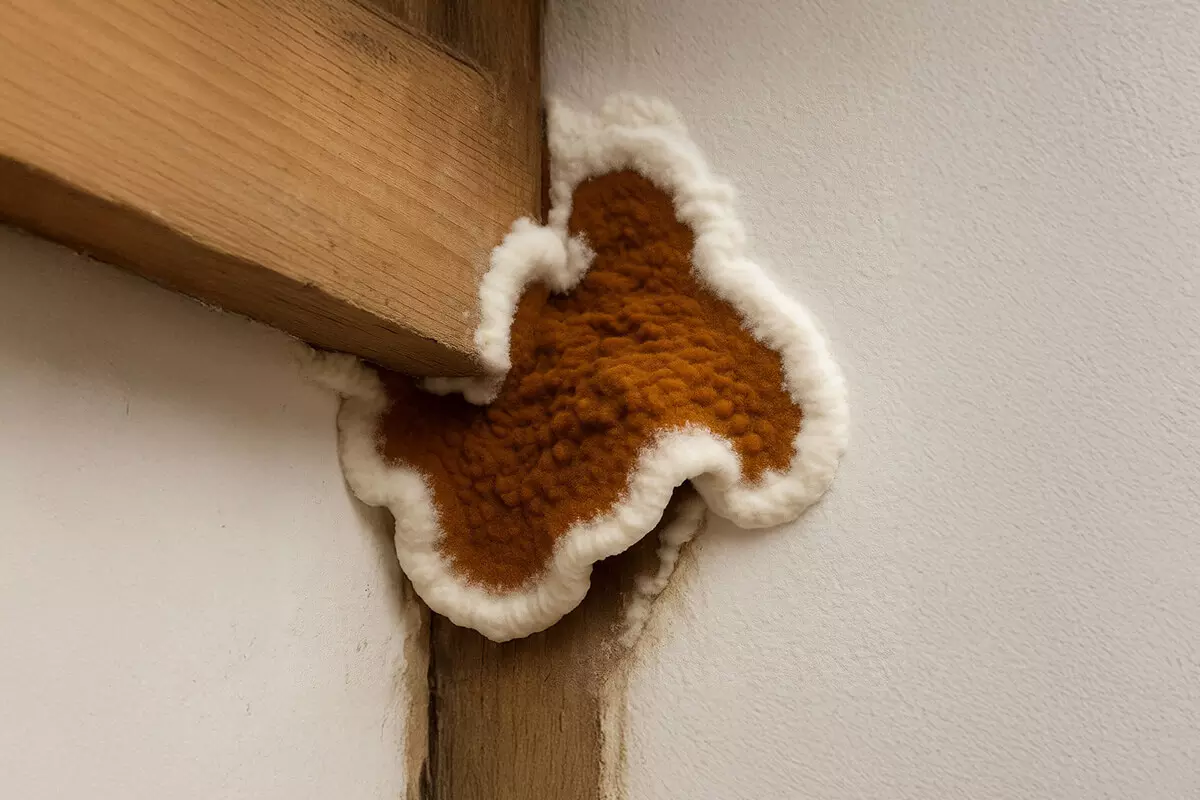
 | What exactly are timber fungi?Timber fungi belong to a specific group of wood-destroying organisms that feed on cellulose in wooden building materials. They thrive in damp conditions and spread through spores that travel via air currents, cavities and even small cracks in walls. Although timber fungi are often confused with mould, they are not the same:
Why do timber fungi pose such a serious risk?When timber fungi are active, the wood in your property gradually breaks down. Beams become soft, weakened and lose their load-bearing capacity. Without timely intervention, this can lead to:
Some species, such as the notorious dry rot, can spread extremely aggressively. This species has the unique ability to transport moisture through building materials, allowing it to attack even dry materials. |
How to identify timber fungi in your home (detailed checklist)
Identifying timber fungi relies on three categories of observation: visual signs, odour and structural changes. Below you will find one of the most comprehensive checklists available, adapted to residential properties.
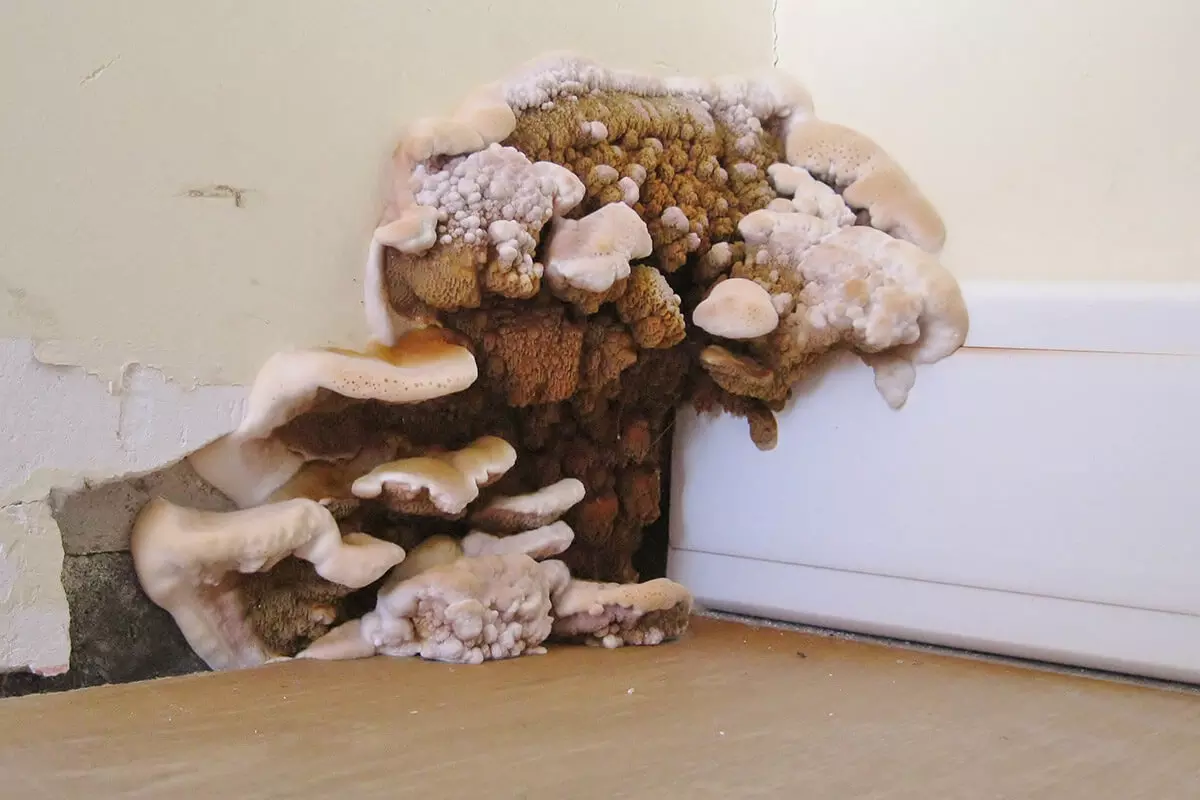
1. Visual signsTypical characteristics:
| 2. Odour: one of the clearest indicatorsTimber fungi are often accompanied by a very distinctive musty smell. Homeowners frequently describe it as:
If you notice this smell without visible signs, the fungus may be hidden behind walls or beneath floors. | 3. Structural signs
|
The most common types of timber fungus in residential properties
Protector treats timber fungus cases every year across the country. The three most common types are:
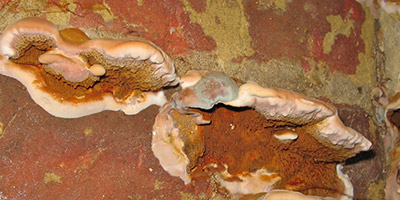
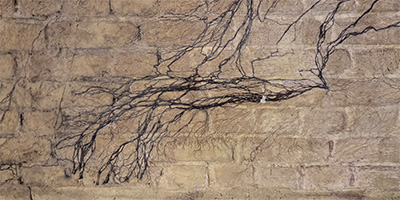
Dry rot (Serpula lacrymans)The most dangerous and aggressive timber fungus. Identification:
Risk: |
Wet rot (Coniophora puteana)The most common fungus found in damp areas such as basements. Identification:
Risk: |
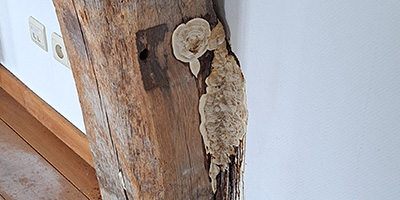
Polypore fungusA collective term for several fungal species with pore-bearing, mushroom-like structures. Identification:
|
Causes of Fungal GrowthFungi never appear spontaneously. There is always an underlying cause: Typical Causes
In more than 80% of fungal cases, moisture is the main cause. | 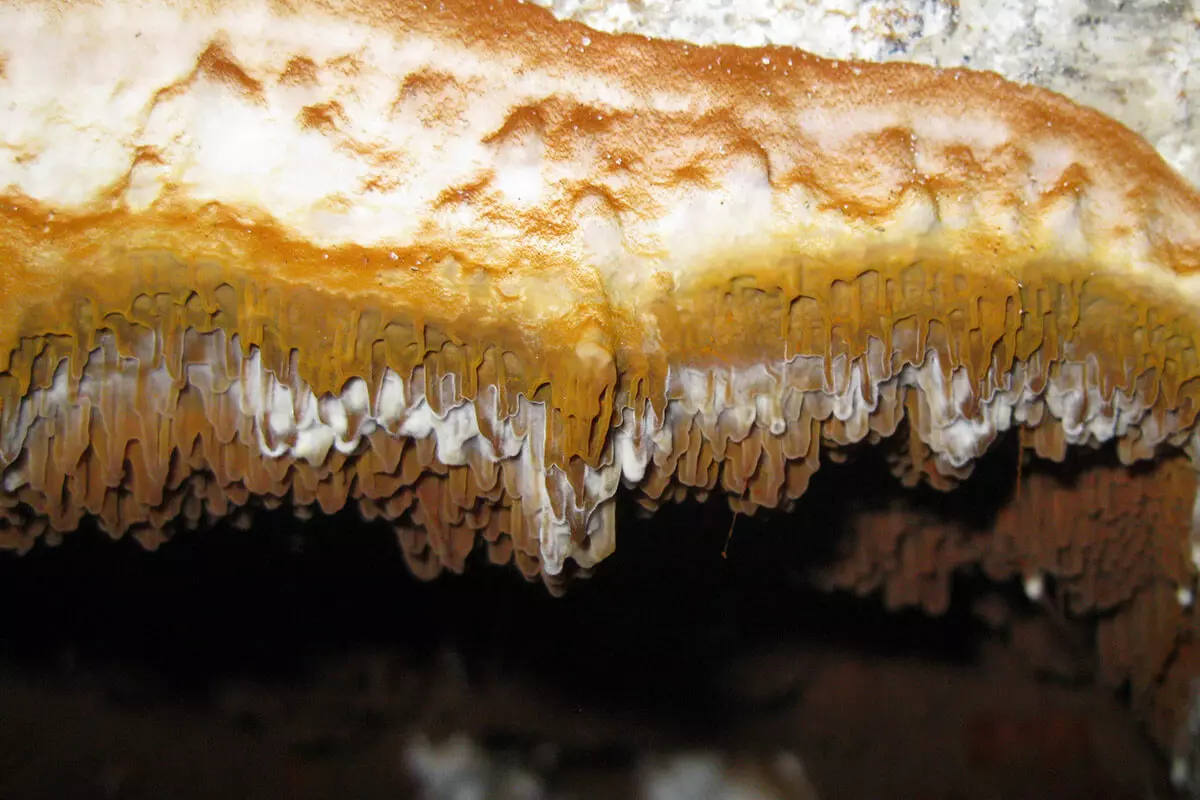 |
Professional Diagnosis by Protector
If you suspect fungus, a professional inspection is essential. DIY removal is rarely effective. The fungus often returns.
How Does a Professional Diagnosis Work?
The fungal diagnosis by Protector consists of:
1. Visual Inspection
Using lamps, probes, and inspection tools.
2. Moisture Measurement
We measure the moisture content of the wood.
3. Drill Test if Necessary
Small test to assess the wood’s structure.
4. Identification of Fungus Type
Based on characteristics, presence of fruiting bodies, and mycelium.
5. Reporting
You will receive a report with:
- Fungus type
- Degree of infestation
- Risks
- Approach & quote
The full diagnosis has a cost depending on the extent and is deducted from the price if treatment is carried out.
How Does Protector Treat Fungus in Your Home?Our method consists of several phases. Fungal Treatment Step-by-StepStep 1 - Removal of Infested MaterialsAll contaminated wood is removed down to healthy material. Step 2 - Chemical TreatmentWe use a certified product to completely kill the fungus. Step 3 - Heat Treatment / Deep ImpregnationFor stubborn types, an additional technique is applied. Step 4 - Resolving Moisture IssuesIf applicable:
Step 5 - Preventive ProtectionTreatment of surrounding areas to prevent recurrence. Protector provides a 20-year guarantee on the executed treatment. All products used are certified. |
Protector operates throughout Belgium
|
![Map of Belgium with the cities where Protector has offices [NOTE: place names on the map are in French, even on NL pages]](/images/protector-kantoren-kaart-fr.png "Map of Belgium with the cities where Protector has offices [NOTE: place names on the map are in French, even on NL pages]")
 | Checklist: Do You Have Fungus in Your Home?
If one or more “yes” → professional diagnosis required. |
Have Your Fungal Problem Professionally InvestigatedThe safety of your home depends on the stability of its structure. |
Answers to the Most Common Questions About Fungi in Homes
How Can I Recognise Fungi in My Home?
Recognising fungi in a home starts with paying attention to clear signs. They often cause discoloration of wooden elements, a musty or damp smell, and visible growth of white, brown, or rust-coloured mycelium. Fruiting bodies may appear as brown-white discs with wavy edges. Infested wood often feels soft, spongy, or crumbly. Loose skirting boards, sagging beams, or dark basement patches may indicate fungal growth. Since fungi can develop behind walls or under floors, a professional diagnosis is recommended as soon as one or more of these signs are detected.
What Are the Main Causes of Fungi in Homes?
Fungi almost always develop due to moisture problems. Wood becomes susceptible when moisture levels remain elevated over time. Typical causes include rising damp, condensation, poorly ventilated basements, leaking pipes, roof infiltration, or wet building materials after renovation or water damage. Thermal bridges and poor insulation can also lead to moisture accumulation. Professional diagnosis always investigates both the fungus itself and the underlying moisture source. Without resolving the moisture issue, fungi almost always return.
Is House Fungus Dangerous for My Home?
Yes. House fungus is the most aggressive and damaging fungus in Belgium. It can draw moisture from its surroundings, making even dry wood damp and vulnerable. House fungus spreads quickly through walls, floors, and load-bearing beams. It breaks down cellulose, causing wood to lose strength and become soft or spongy. Without timely treatment, this can lead to structural instability, sagging floors, and dangerous situations in older buildings. A rapid diagnosis and treatment are therefore essential to prevent further damage.
Can Fungi Spread to Other Rooms?
Yes. Fungi spread through microscopic spores carried by air currents. Some species, such as house fungus, also form mycelium strands metres long that can grow through plaster, bricks, and joints. As a result, an infestation can extend from the basement to the ground floor or from a damp wall to other rooms. Spread is especially rapid in poorly ventilated or damp areas. Therefore, if fungus is found in one room, it is important to have the entire home inspected so that all spread paths are correctly assessed.
How Is Fungus Professionally Treated?
Professional fungal treatment involves several steps. First, all affected parts of walls are cut away and infested wood removed down to healthy material. The entire area is then treated with a certified fungicide that kills both mycelium and spores. In severe infestations, additional deep impregnation techniques may be applied. The underlying cause, usually moisture, is then addressed through wall injection, basement sealing, or leak repair. Finally, a preventive protective layer is applied to avoid re-infestation. Protector provides a 20-year guarantee on this treatment, depending on the system used.
How Much Does Fungus Removal Cost?
The cost of removing fungus depends on several factors: fungus type, extent of infestation, accessibility, treatment products required, and whether wood replacement is necessary. Small interventions may only require targeted treatment, while severe infestations may require additional structural work. An accurate diagnosis is therefore necessary for a precise cost estimate.
How Can I Prevent Fungi from Returning?
Preventing fungi starts with eliminating moisture problems. Proper ventilation, avoiding condensation, repairing leaks, and treating rising damp are key steps. It is also essential to keep wooden structures dry and healthy. After professional treatment, a preventive protective layer is applied to limit future infestations. Regular inspections, especially in older homes, help detect early signs. Since fungi often start in hidden areas, periodic expert checks can ensure your home remains fungus-free for the long term.