

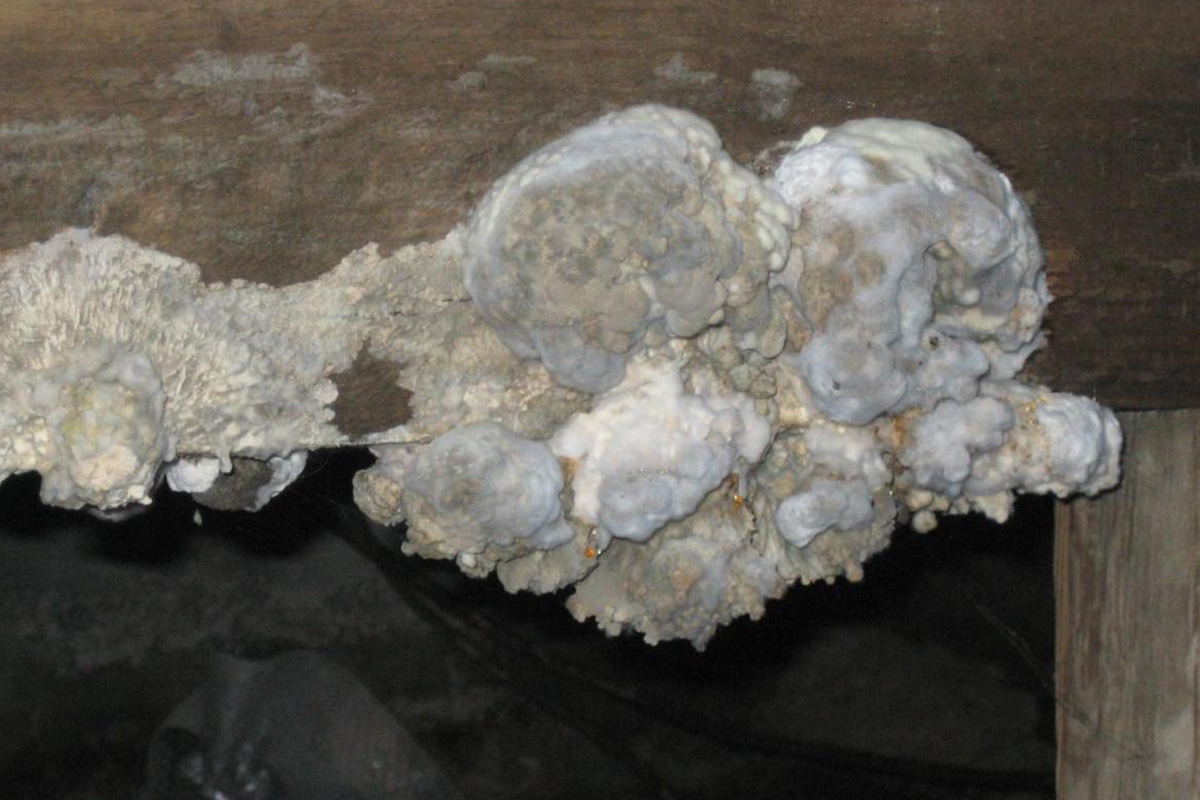
 | What is pore fungus? (Poria)Pore fungus is a wood-damaging fungus that mainly occurs in damp or poorly ventilated spaces. The fungus feeds on cellulose, an essential component of wood. This weakens the wood structurally, causing it to crack into cubes (brown rot) and eventually crumble. Why is pore fungus so common in Flanders and Brussels?
Pore fungus never disappears on its own. As long as the environment contains enough cellulose and moisture, it continues to grow and damage new structures. |
How to recognise pore fungus?
Correct recognition is crucial for prompt intervention. Below is a detailed checklist based on dozens of inspections in Flanders and Brussels.
Appearance
What does affected wood look like?
| Odour
Common places in the home
|
When you see these signs, prompt diagnosis is necessary. The longer you wait, the greater the damage, sometimes irreversible.
How dangerous is pore fungus?Pore fungus is not merely an aesthetic problem. It is one of the most aggressive wood-damaging fungi in our region. Structural damageBy breaking down cellulose, wood loses strength. Consequences can include:
In apartments, pore fungus can even spread to neighbouring units if conditions are favourable. Health risksAlthough pore fungus is not toxic like some black moulds, spores can cause:
Children, the elderly, and allergy sufferers are more sensitive. |
Causes of pore fungusPore fungus never develops randomly. There is always an underlying cause. Moisture (most common cause)The fungus develops at wood moisture contents above 20–25%. Typical triggers include:
Temperature & light
Wood types most frequently affected
|  |
Why pore fungus removal is never a DIY projectPore fungus actively spreads through spores and fungal threads that penetrate deep into materials. Attempting DIY removal almost always leads to:
Professionals have:
|
Professional pore fungus removal: our full approach
A professional treatment ensures the fungus is completely and permanently removed.
Here is the full Protector process.
1. Inspection & diagnosis
Our expert analyses:
- The type of fungus
- The extent of the infestation
- Which structures are affected
- Where the infestation started
- Whether structural damage is present
- Which materials need replacement
Duration of inspection: typically 60–90 minutes (depending on accessibility)
During the inspection we carry out:
- Visual analysis
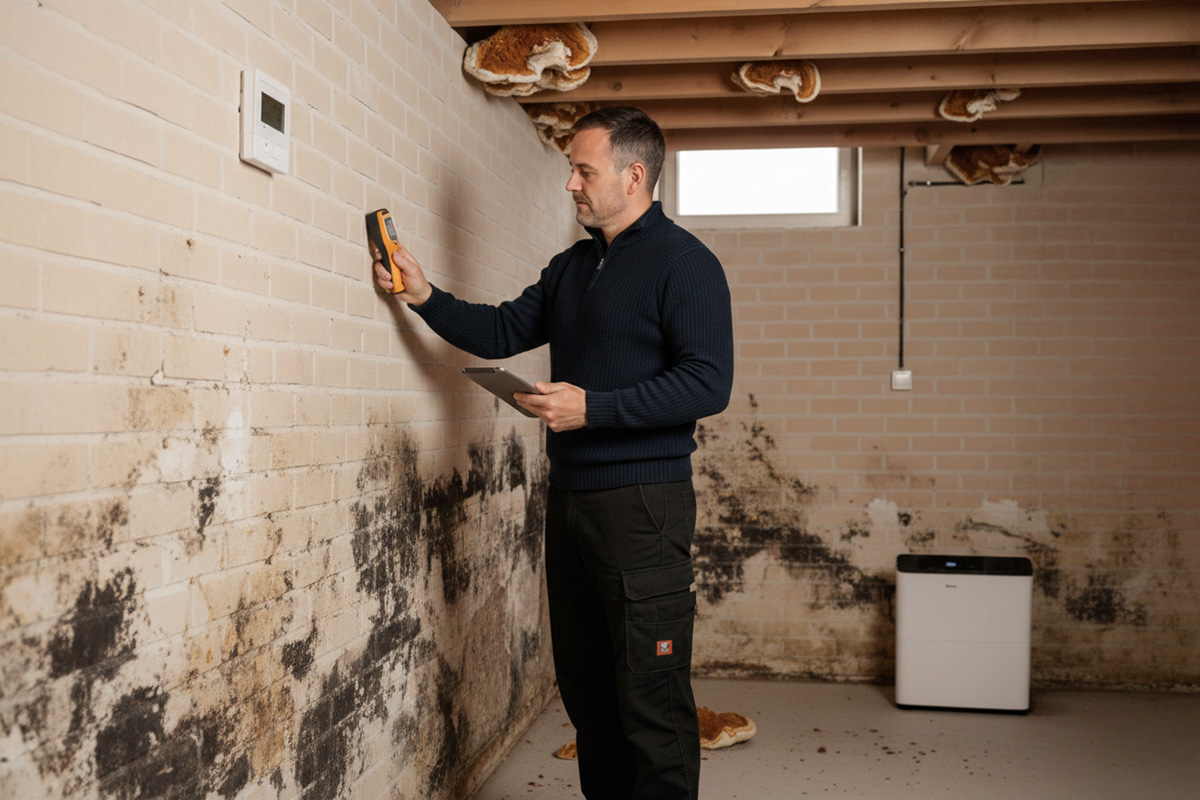
- Wood moisture measurement
- Leak checks
- Ventilation inspection
- Analysis of adjacent structures
2. Cause identification & repair
Before treatment, the core problem must be addressed:
- Leak detection and repair
- Gutter or pipe repair
- Treat rising damp if necessary
- Improved ventilation solutions
3. Removal of affected wood
All infected or structurally unstable materials are removed:
- Wooden beams
- Floorboards
- Door and wall cladding
- Hidden structures behind plasterboard or skirting
Hidden zones are also exposed if needed.
4. Deep cleaning & disinfection
This is one of the most important steps to prevent regrowth.
We clean:
- Walls
- Floors
- Beam heads
- Cavities
- Cracks and joints
We use professional disinfection methods not available commercially.
5. Application of anti-fungal product
All surfaces are treated with an industrial pore fungus killer:
- Deep-penetrating
- Long-lasting effect
- Protection against reinfestation
Applied only by a certified expert.
6. Replacement of affected wood
Affected parts are replaced with:
- Treated wood
- Moisture-resistant material
7. Restoration of finishes
Protector takes care of:
- Plasterwork
- Wall finishes
- Floor or ceiling repair
- Dust-minimised work
- Minimal disruption in occupied spaces
8. Aftercare & guarantee
After treatment, you receive clear instructions on:
- Prevention
- Ventilation
- Follow-up
You also receive a written report + treatment guarantee.
How much does pore fungus removal cost? (Indicative prices)
Since every situation is unique, indicative prices are difficult to provide.
Factors influencing the price:
- Surface area
- Depth of infestation
- Need for structural repairs
- Accessibility
- Required ventilation or moisture treatment
Exact prices are provided after a free inspection.
 | Prevention tips to avoid pore fungus
|
Protector operates throughout Belgium
|
![Map of Belgium with the cities where Protector has offices [NOTE: place names on the map are in French, even on NL pages]](/images/protector-kantoren-kaart-fr.png "Map of Belgium with the cities where Protector has offices [NOTE: place names on the map are in French, even on NL pages]")
Why choose Protector?
|
Schedule your inspectionUnsure if you have pore fungus? Don’t let it spread. Request a professional diagnosis today. |
Answers to the most frequently asked questions about pore fungus removal
How can I be sure I have pore fungus?
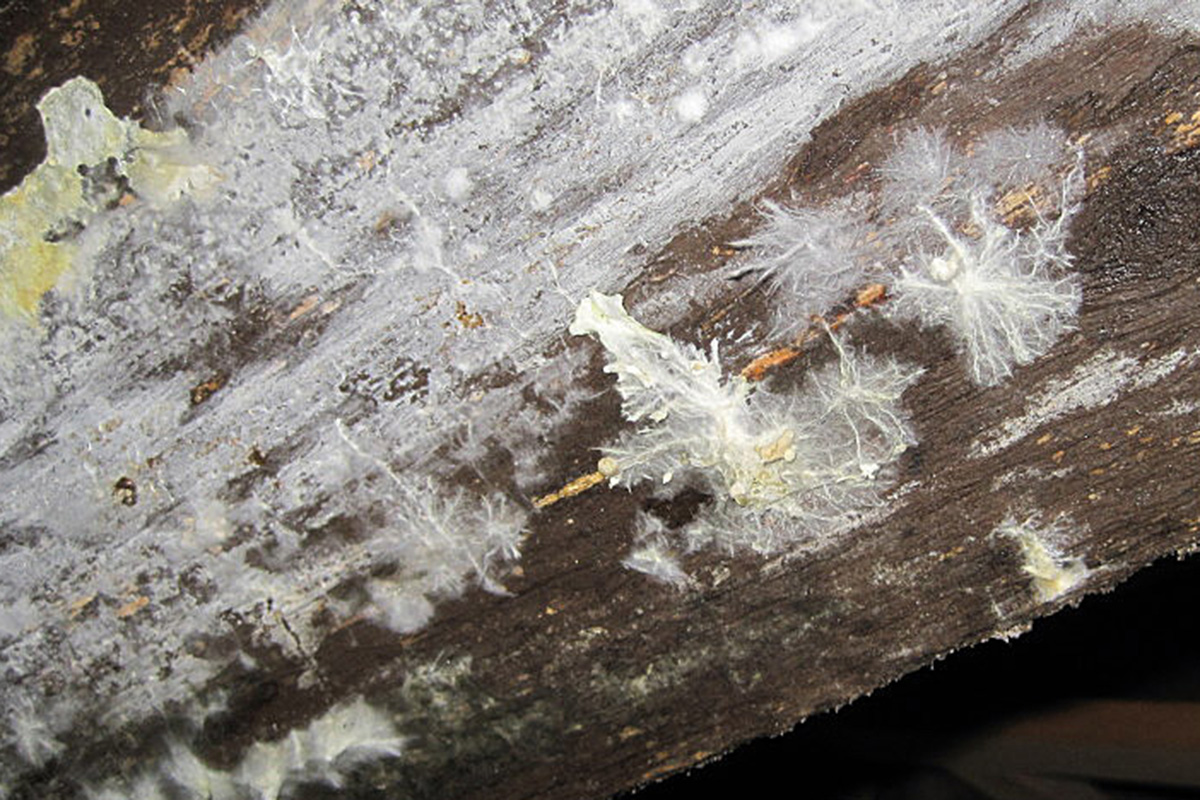
Pore fungus is noticeable by white to pale yellow flakes resembling cauliflower or cotton. The surrounding wood turns brown, becomes brittle, and cracks into small cube-shaped pieces – a typical sign of brown rot. Additionally, mycelium often grows through joints, gaps, and behind finishes, meaning the fungus affects a larger area than what is visible. Because pore fungus closely resembles other wood fungi, such as house fungus or cellar fungus, professional identification is essential. During an inspection, our experts analyse wood moisture, mycelium structure, and fungal spread. This ensures you know exactly which type of fungus is present and what treatment is required. A full diagnosis typically takes 60–90 minutes.
How long does it take to remove pore fungus?
The duration of a pore fungus treatment depends on the size and depth of the infestation. Smaller infestations can usually be treated in one working day, while deeper or widespread infestations may take several days. A complete treatment includes inspection, cause identification, removal of infected wood, deep cleaning, disinfection, and structural repair. In homes in Flanders and Brussels, a standard treatment usually takes 1 to 3 working days. During the inspection, you will receive a clear estimate so you know exactly what to expect.
Can pore fungus return after treatment?
Pore fungus can only return if the underlying cause, usually moisture issues, is not fully resolved. Therefore, a professional treatment always involves two parts: removing the fungus itself and addressing the source. Our approach combines deep cleaning, structural inspection, cause remediation, and the use of professional long-lasting anti-fungal products. When all steps are carefully followed, the risk of reinfestation is minimal. You also receive a guarantee on the treatment for lasting peace of mind.
What happens to affected wood during the work?
Affected wood is completely removed to prevent leftover spores from causing new growth. All affected areas are exposed until healthy wood is reached. This sometimes requires temporary removal of floors, walls, or finishes. All surfaces are then thoroughly cleaned, and a deep-acting anti-fungal product is applied. Finally, the affected wood is replaced with treated, moisture-resistant material, and plasterwork, flooring, or finishes are restored to a neat finish.
How much disruption can I expect during treatment?
We deliberately work dust-minimised and in a controlled environment so your home remains habitable. We use extraction, protective sheeting, and professional protective materials to minimise dust, odour, and noise. Most rooms remain accessible, though some areas may be temporarily restricted. We always communicate this in advance so you know exactly what to expect. Our goal: efficient treatment with minimal disruption.
How much does a professional treatment cost?
The cost depends on the size of the affected area, the depth of the infestation, necessary structural repairs, and accessibility. Smaller infestations are quicker and cheaper to treat, while larger or deeper infestations require more time and materials. Because every situation is unique, we always perform a free inspection first. This provides a clear, transparent, and precise quote tailored to your property.