

 | How can you identify woodworm? (check your wood in 30 seconds)Identifying woodworm is not always straightforward. The larvae are often deep inside the wood, and damage only becomes visible at a later stage. Use this quick checklist: Woodworm checklist (30 seconds)
If one or more answers are “yes”, there is a high chance that woodworm is active. In that case, a professional diagnosis is recommended. Within 60–90 minutes, an expert can determine which type of woodworm is present, how deep the infestation is and which treatment is required. |
What does woodworm damage look like?
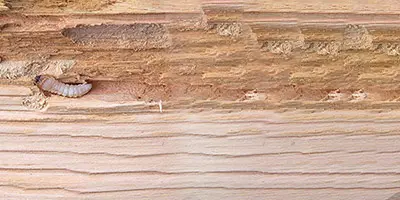
Bore dust: your most important indicator
Bore dust is fresh, light and fine, similar to talcum powder. It is often found beneath beams, skirting boards, attic floors or wooden furniture. Fresh bore dust = active infestation.
Exit holes
The diameter of the holes helps determine the type of woodworm:
| Type of woodworm | Exit hole diameter | Characteristic |
|---|---|---|
| Common furniture beetle | 1–2 mm | Most common in homes |
| Powderpost beetle | 1 mm | Extremely fine holes, often clustered |
| Deathwatch beetle | 2–3 mm | Larger, rough openings |
| House longhorn beetle | 6–10 mm | Oval openings, structural damage |
The 4 types of woodworm in Belgium
Below is a complete overview of all wood-boring insects that cause damage in Belgian homes.
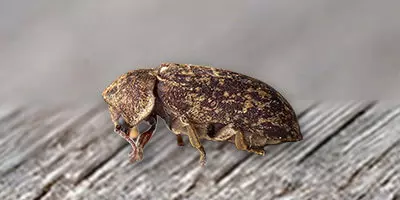
Common furniture beetle (Anobium punctatum)The most common species in Belgium. It attacks both old and relatively young wood. Characteristics:
Susceptible wood types: softwood and other softer woods. Why professional treatment? |
Deathwatch beetle (Xestobium rufovillosum)Often confused with the longhorn beetle, but differs in sound and damage pattern. Characteristics:
Risk: |
House longhorn beetle (Hylotrupes bajulus)The most destructive species. Very common in Belgian roof structures. Characteristics:
Typical locations: attics, roof structures, load-bearing beams, verandas and sheds. Importance of treatment: |

How does Protector treat woodworm? (complete step-by-step plan)
Protector follows a fixed, proven approach that complies with Belgian standards and guidelines.
1. Diagnosis and inspection
An expert examines:
- type of wood
- bore dust
- exit holes (diameter and pattern)
- moisture content of the wood
- stability of the beams
Inspection duration: 60–90 minutes, depending on accessibility.
2. Preparatory work
Proper preparation is essential for optimal penetration of the treatment product. The following steps are carried out partly by you and partly by our expert:
- Removal of insulation around or against the wooden elements to be treated
- Dusting the wood so the product can penetrate more effectively
- Removing loose or weakened wood residues
Which preparatory tasks you carry out yourself is always clearly communicated in advance, such as removing insulation or clearing specific areas to allow smooth treatment.
3. The treatment
Surface treatment
Ideal for light to moderate infestation.
Process:
- dusting the wood
- pressure spraying of insecticide
- saturation of the surface
The products used contain professional concentrations of active substances that are not available to the general public.
Deep treatment (injection)
Required in cases of:
- house longhorn beetle
- deathwatch beetle
- deeply tunnelled beams
- structural damage
Process:
- drilling injection holes
- pressure injection of insecticide
- sealing the holes
- possible reinforcement or replacement of weakened sections
4. Repair and reinforcement
Damaged parts are:
- removed
- reinforced
- or replaced
Protector ensures all work complies with structural safety standards.
5. Aftercare and prevention
You receive advice on:
- ventilation
- moisture control
- maintenance
- monitoring risk areas
Protector optionally offers a warranty period.
How much does a woodworm treatment cost?The price depends on several factors:
Protector performs a full activity test during the inspection. |
DIY woodworm control vs professional: comparison table
Conclusion: for real woodworm, DIY is almost never effective. |
Protector operates throughout Belgium
|
![Map of Belgium with the cities where Protector has offices [NOTE: place names on the map are in French, even on NL pages]](/images/protector-kantoren-kaart-fr.png "Map of Belgium with the cities where Protector has offices [NOTE: place names on the map are in French, even on NL pages]")
Why choose Protector?
|
Ready to eliminate woodworm for good?Request a rapid inspection and receive a complete solution for your wooden structures. Our specialists are available in every province. |
Answers to frequently asked questions about identifying woodworm, damage and inspections
How do I recognise active woodworm and distinguish it from old damage?
Active woodworm is mainly recognisable by fresh bore dust, bright round holes, and weakened wood. Fresh bore dust appears as light, fine powder that reappears when larvae continue gnawing tunnels. Old damage shows no fresh dust, and holes are dark, dusty, and rounded. A hollow sound when tapping beams or floors also indicates recent activity. In some cases, the tapping of adult beetles can be heard during the breeding season. When in doubt, Protector conducts a professional inspection to measure bore dust freshness, species identification, and wood strength, so you know immediately if the infestation is active and what steps are necessary.
What are the first signs that woodworm is causing damage?
Early signs are subtle: small holes in floorboards, light bore dust on the ground, warped skirting boards or hollow-sounding beams. As the infestation progresses, wood softens, cracks appear, and steps or floorboards can lose strength. Loose wood fibres and irregular warping of paint or varnish are classic indicators. Since woodworm works from the inside out, real damage often only becomes visible later. Any early indication is enough to schedule a professional inspection—the sooner you act, the lower the risk of structural damage.
Which parts of a home are most affected by woodworm and why?
Woodworm is most common in roof structures, floor beams, wooden floors, attics, beam ends and stairs. Dry, poorly ventilated areas are particularly vulnerable as beetles can lay eggs in small cracks and gaps. Older homes with original construction are more at risk because the wood is often softer or drier, making ideal food for larvae. In less used parts, such as decorative mouldings, larvae can develop for years without being noticed. Protector always inspects all wooden elements, including hard-to-reach areas with the highest risk.
How does woodworm develop and how quickly does it cause damage?
Woodworm begins when a beetle lays eggs in cracks or gaps in wood. Larvae emerge and live 2–4 years inside, continuously gnawing tunnels. Most damage occurs during this stage. When larvae mature into adult beetles, they gnaw an exit hole to leave the wood. Warm and dry conditions accelerate this cycle, potentially doubling damage within a single season. Because larvae remain hidden for years, damage is often only detected when wood is visibly weakened. Early inspection is essential to prevent further damage.
How do I know if woodworm is dangerous for structural stability?
Woodworm can seriously compromise a building’s stability if load-bearing beams, roof structures, or beam ends are infested for long periods. Tunnels gnawed by larvae weaken the wood and reduce its load-bearing capacity. Typical risks include sagging floors, unstable stairs, and weakened roof structures. In some cases, beam ends can lose more than half their strength. Protector assesses not only woodworm activity but also the real structural impact through depth measurements and visual analysis, giving you immediate clarity on safety and required repairs.
What happens during a professional inspection by Protector?
During an inspection, a specialist examines all wooden elements: roof structures, floor beams, stairs, beam ends, and hard-to-reach zones. We analyse bore dust, hole patterns, tunnel structure, and wood strength. Using depth measurements and species identification, we determine whether the infestation is active and which beetle species is responsible. A clear risk analysis and overview of necessary treatments or repairs follow. Inspections typically take 60–90 minutes depending on accessibility, providing you with rapid clarity and precise steps to stop further damage.
How much does a woodworm treatment cost and when do I get a quote?
The cost of a woodworm treatment mainly depends on the type of infestation and the size of the area to be treated. Since every home and infestation is different, Protector does not work with standard prices. During the inspection, we identify the beetle species, assess the extent of the damage, and determine the areas to be treated. You then receive a transparent, customised quote so you know exactly what costs are involved and which solutions are most effective for your situation. There are no surprises, and you clearly understand the steps needed to protect your home.