

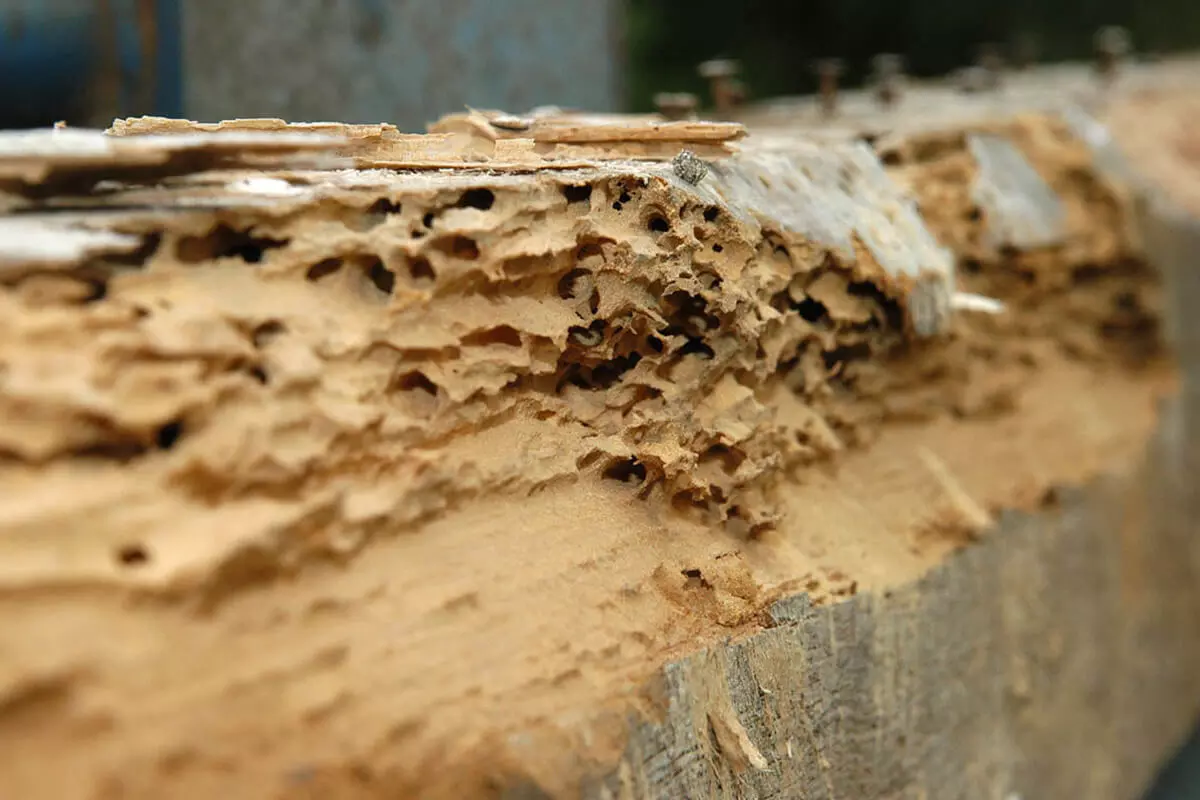
 | What exactly is woodworm?“Woodworm” is not actually a worm, but the larva of a wood-boring beetle. In Belgium, the following species are most common:
Each species has its own damage patterns, lifespan and identifying features. A correct diagnosis is therefore crucial in order to apply the correct treatment. |
How to recognise woodworm: 10 clear symptoms
Below are the most reliable signs our inspectors use to identify active or old woodworm.
1. Small round holes (1–2 mm)
These are exit holes: openings where the beetle leaves the wood. They are:
- perfectly round
- uniform in diameter
- often present in large numbers
Please note: old holes remain visible for life. That is why fresh bore dust is important (see below).
2. Bore dust or wood dust under beams or furniture
Fresh bore dust is the strongest indicator of active woodworm. How can you recognise it?
- light and powdery
- beige to light brown
- new bore dust feels “dry and fine”
- old bore dust is often clumped or discoloured
During an inspection, Protector uses a bore-dust freshness test to determine activity.
3. Loose wood fibres when touched
In cases of severe infestation, wood fibres may break away spontaneously.
4. Larvae in the wood (rarely visible, but possible)
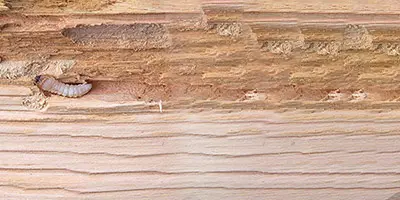
Woodworm larvae are cream-coloured and curved. They live deep inside the wood. If you see them, there is serious damage.
5. Tapping or gnawing sounds
Only with certain species such as the deathwatch beetle. The sound is caused by:
- males tapping to attract females
- larvae gnawing inside dry wood
This is a definite sign of activity.
6. Discolouration or blistering in varnish or paint
The larvae feed beneath the surface and push the paint layer upwards. When scraped open, tunnels or bore dust are often visible.
7. Tunnels in the wood
These are long, winding tunnels just beneath the surface. In older houses, this is a typical sign of multiple generations of infestation.
8. Worn edges on floorboards or stair treads
This indicates structural loss. Our inspectors use a mechanical depth measurement to determine whether beams are still safe.
9. Soft or weakened wooden surfaces
When wood is eaten away internally, the surface may look intact, but:
- the wood sounds hollow when tapped
- the surface yields slightly under pressure
- cracks or crumbling areas may appear
This indicates advanced infestation.
10. Presence of beetles or cocoons
Adult beetles mainly appear between April and September. A cyclical inspection during this period can provide crucial information.
Active woodworm vs old damage (how can you tell?)Many people see old holes and think there is a problem, while the infestation stopped long ago. Determining the difference is essential.
Protector carries out a full activity test during inspection. |
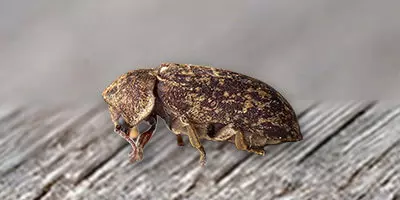
Difference between woodworm, longhorn beetle and deathwatch beetle
Very useful for a correct diagnosis. Protector determines this using a species-specific inspection method.
Woodworm
|
Longhorn beetle
|
Deathwatch beetle
|

How much damage can woodworm cause?If woodworm is left untreated:
Our inspectors report an average of 30–70% infestation in neglected cases. | 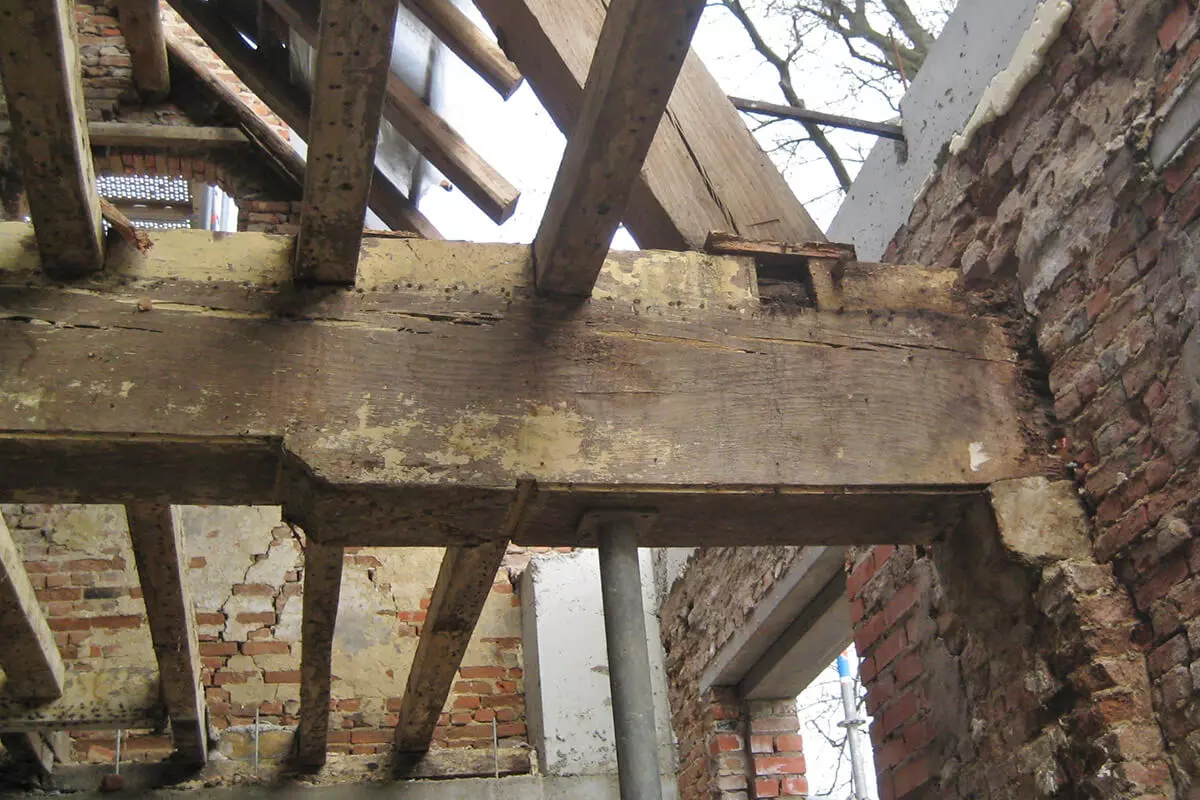 |
Checklist: do you need a professional inspection?You definitely need an inspection if …
Not sure?Protector carries out a diagnosis in 60–90 minutes, depending on the accessibility of the areas. |
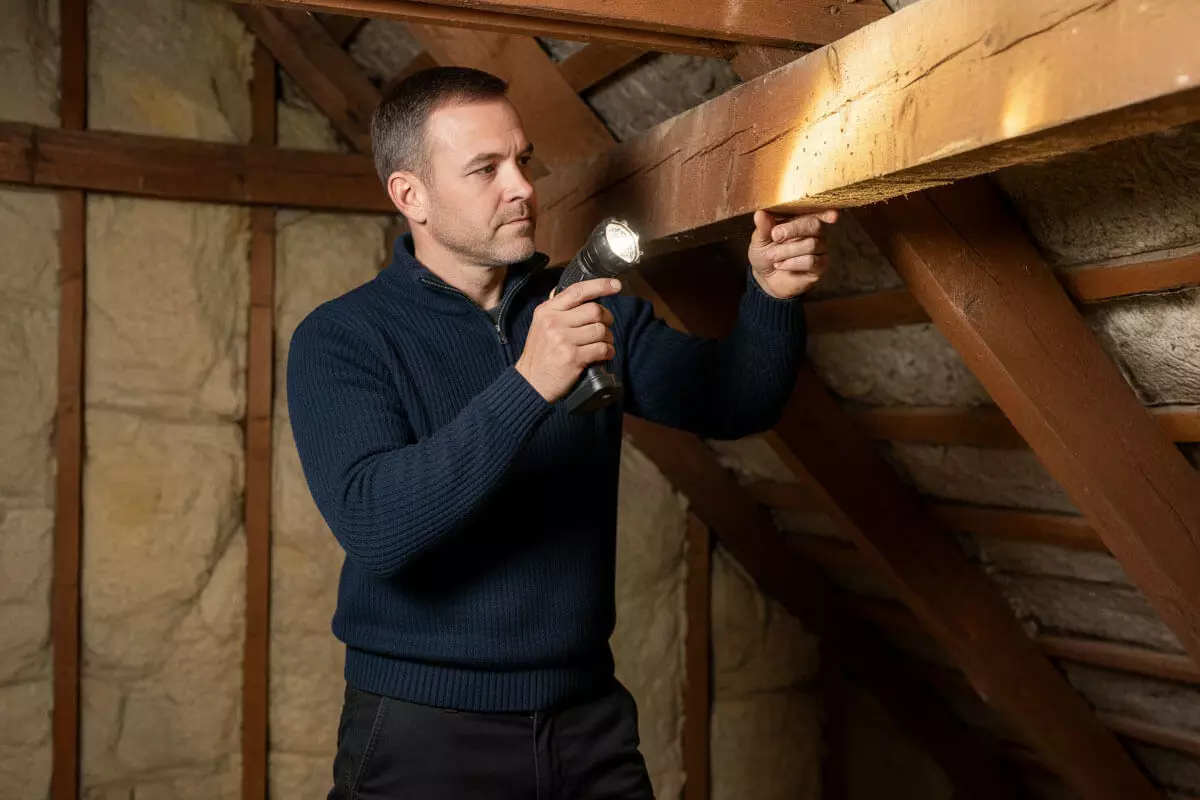 | How does a woodworm inspection by Protector work?Our official inspection method includes:
This process complies with Belgian renovation guidelines. |
How do we treat woodworm? (techniques)
The exact treatment depends on the severity and type of infestation. Protector uses:
Chemical treatment
- deep-penetrating
- residual effect
- suitable for beams and floors
Gel injection technique
- ideal for beam ends and hard-to-reach areas
Structural repairs
If woodworm has been active for a long time, it may be necessary not only to treat but also to repair or replace structural elements. Protector has specialised techniques for sustainable and technically correct renovation of affected timber.
Beam-end replacement with custom-made timber prostheses
In cases of severe infestation, damaged beam ends are carefully removed and replaced with custom-made timber prostheses. These are precisely fitted into the existing structure so that the original load-bearing capacity is fully restored. This method is highly suitable for both modern homes and historic buildings where stability and finish are equally important.
Renovation of historic structures
For listed or architecturally valuable buildings, Protector applies renovation techniques that take into account the original timber, construction style and authentic appearance of the building. Wherever possible, existing wood is retained and new replacement elements are handcrafted to fit perfectly with the original structure.
Price of woodworm treatment in BelgiumThe price depends on:
Protector always provides a transparent quotation based on a professional inspection. |  |
Why choose Protector?
|
Protector operates throughout Belgium
|
![Map of Belgium with the cities where Protector has offices [NOTE: place names on the map are in French, even on NL pages]](/images/protector-kantoren-kaart-fr.png "Map of Belgium with the cities where Protector has offices [NOTE: place names on the map are in French, even on NL pages]")
Do you have questions? We will be happy to help you straight away. |
Frequently asked questions about recognising woodworm
How can I recognise active woodworm in my home?
Active woodworm is mainly identified by fresh bore dust, clean holes, and weakened wood. Fresh bore dust looks like fine, light powder that reappears when larvae are actively gnawing tunnels. Old infestation, on the other hand, has dark or clumped bore dust and dirty holes. Another important signal is a hollow sound when you tap a beam or floor. With certain species, such as the deathwatch beetle, you may even hear a tapping sound during the mating season. Our inspectors always carry out a combination of visual inspection, bore-dust freshness testing and depth measurement to determine exactly whether the woodworm is still active. This prevents damage from continuing unnoticed.
What is the difference between woodworm and the longhorn beetle?
Woodworm and the longhorn beetle are often confused, but the damage is clearly different. Woodworm causes small round holes (1–2 mm) and gnaws relatively slowly. The longhorn beetle creates larger oval holes (6–10 mm) and is known for very aggressive infestation, especially in roof structures. Longhorn beetle larvae can remain active for years and create deep tunnels that compromise structural stability. Louder gnawing sounds are also often heard. Because treatment differs greatly by beetle species, Protector always carries out species identification first to ensure the correct approach.
Is woodworm dangerous for the stability of my home?
Yes. If woodworm is not treated in time, larvae can gnaw tunnels in load-bearing wooden elements for years. This leads to weakened beams, sagging floors or broken stair treads. In roof structures, load-bearing capacity can be severely reduced, posing risks to the stability of the entire building. We regularly encounter infestations where beams have lost 30–70% of their original strength. The longer woodworm remains active, the greater the structural damage and repair costs. A professional inspection is therefore essential to ensure the safety of your home.
How quickly does woodworm cause damage?
Woodworm larvae remain in the wood for an average of 2 to 4 years before emerging. During this entire period, they gnaw tunnels, causing damage to build up slowly but continuously. In warm or poorly ventilated areas, this process can be even faster. In older homes or damp lofts, infestation may also spread to multiple beams or floor sections. Damage often only becomes visible once the wood is weakened, which is why early inspection is so important to prevent further deterioration.
How do I know if woodworm is still active or not?
Distinguishing between active and old infestation is crucial. Active woodworm can be recognised by fresh bore dust, clean holes, tapping or gnawing sounds, and areas where the wood feels as though it gives under pressure. Old infestation produces no bore dust and the holes are dark and dusty. Protector uses several techniques to reliably determine activity: bore-dust freshness analysis, mechanical depth measurement, inspection of tunnel structures and, if necessary, seasonal checks (April–September). This provides you with a conclusive diagnosis.
How does a professional woodworm inspection work?
A woodworm inspection takes an average of 60–90 minutes, depending on accessibility. We begin with a visual check of all wooden elements: roof structures, floor beams, stairs, furniture and beam ends. We then carry out a depth measurement to determine whether the wood still has sufficient load-bearing capacity. Next, we examine bore dust, tunnel patterns and hole shapes to identify the beetle species. After the diagnosis, you receive a clear inspection report with findings, risk analysis and a proposal for treatment or repair.
How much does woodworm treatment cost?
The cost of woodworm treatment mainly depends on two factors: the type of infestation and the size of the area to be treated. Every property is constructed differently and each infestation develops in a unique way, which means there is no standard price that applies to every situation. During an inspection, a Protector expert determines which beetle species is present, how advanced the damage is and how many timber structures need to be treated. Based on this, you receive a transparent, tailored quotation, so you know exactly which steps are required and what the costs will be. This way, there are no surprises and you receive a solution fully tailored to your home and situation.