

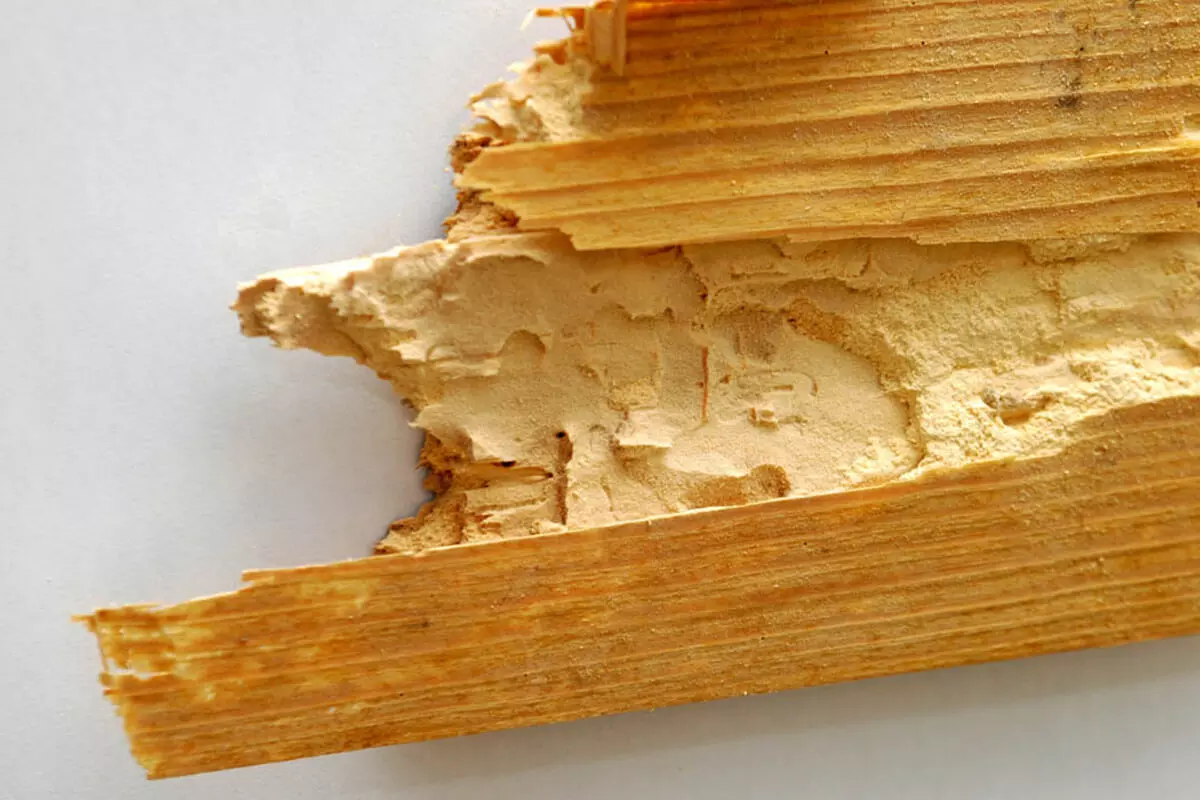
 | Why woodworm must always be treated professionallyWoodworm is a collective term for larvae of various beetle species that live in your wood for years, consuming it from the inside. The consequences?
That is why a professional treatment is necessary. Not with DIY remedies, but with deep-penetrating techniques that eliminate both larvae and adult beetles. |
Our approach: from diagnosis to final treatment
An efficient treatment begins with correct identification. Each woodworm species requires a different approach.
1. On-site inspection
Our experts visit your location to assess:
- the type of woodworm
- the severity of the infestation
- the condition of the wood
- accessibility
- risk of structural damage
Inspection duration: 30–45 minutes depending on the property
2. Diagnosis & report
You receive a summary including:
- which woodworm is active
- which areas are affected
- wood moisture measurements
- photos of the infestation
- recommended treatment
- cost estimate €/m²
3. Treatment according to woodworm type
Each type has specific techniques. Below is an overview of the impact of each species and the required treatment.
4. Aftercare & warranty
Protector provides a 20-year warranty on every woodworm treatment, which we discuss with you after the diagnosis.
Which woodworm do you have?
The four most common woodworm species in Belgium and Luxembourg:
House longhorn beetle |
Small deathwatch beetle (Memel) |
Large deathwatch beetle |
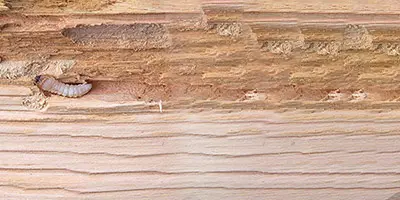

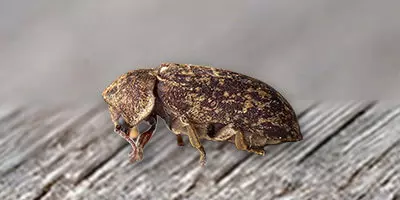
Below is a recognition guide for each species and the specific treatment advice.
The house longhorn beetle |
The most damaging woodworm species in our region. How to recognise the house longhorn beetle:
Symptoms in your wood:
How we treat the house longhorn beetle:Its powerful jaws and deep feeding tunnels mean a standard surface treatment is insufficient. Recommended treatment (professional)
Typical treatment duration1 to 3 days depending on the building. |
The small deathwatch beetle (Memel) |
Common in old houses, churches, and cellars. Recognition
Symptoms:
Treatment for small deathwatch beetleStandard approach
Typical duration1 day for standard treatment |
The large deathwatch beetle |
Often found in older buildings with damp wood. Recognition
Symptoms:
Treatment for large deathwatch beetleThis species requires a combined treatment. Professional approach
Typical duration1–2 days |
The powderpost beetle (parquet beetle) |
Very common in parquet floors, furniture, and wooden panels. Recognition
Symptoms:
Treatment for powderpost beetleRecommended technique
Duration1 day |
Additional services at ProtectorStructural reinforcementWhen wood is structurally weakened by woodworm, we repair:
Using techniques such as:
Wood moisture measurement and remediationSince moisture greatly influences activity, we measure and remediate if necessary:
|  |
Step-by-step plan for your woodworm treatment
1. Free advice & contact
Call us at 0800 30 163 or use the contact form.
2. On-site inspection
Our expert quickly visits after phone contact to assess the severity of the problem.
3. Diagnostic report
Includes woodworm type, infestation zones, moisture measurement, and recommended plan.
4. Professional treatment
Surface, injection, or combined methods.
5. Check & warranty
We verify the treatment and register your warranty.
Checklist: is your woodworm still active?The checklist below is also used by our inspector on-site. You can already confirm about 80% of activity yourself.
If there are at least 2 “YES”, an inspection is strongly recommended. |
Which treatment suits which woodworm?
The four most common woodworm species in Belgium and Luxembourg:
House longhorn beetleCharacteristics
Recommended treatment
Duration
|
Small deathwatch beetleCharacteristics
Recommended treatment
Duration
|
Large deathwatch beetleCharacteristics
Recommended treatment
Duration
|
Protector operates throughout Belgium
|
![Map of Belgium with the cities where Protector has offices [NOTE: place names on the map are in French, even on NL pages]](/images/protector-kantoren-kaart-fr.png "Map of Belgium with the cities where Protector has offices [NOTE: place names on the map are in French, even on NL pages]")
Why choose Protector?
|
Quick assistance from a certified woodworm expert?Our specialists are ready across Belgium and Luxembourg. |
Frequently Asked Questions about Treating Woodworm and the Correct Approach
What is the best way to professionally treat woodworm?
The best method to treat woodworm depends on the type of beetle, the severity of the infestation, and the accessibility of the wood. In most homes, a combination of surface treatment and deep injections is the most effective approach. The surface treatment penetrates a few millimeters into the wood and eliminates active larvae in the upper layer. Deep injections ensure the product reaches deeper tunnels where larvae can remain active for years. In cases of structural damage or affected beam ends, additional repairs may be necessary. A professional inspection determines the exact technique required and prevents further spread of the infestation.
How long does it take to completely remove woodworm?
A woodworm treatment usually takes between 1 and 3 days, depending on the extent of the infestation and the type of treatment. Simple surface treatments are generally completed in one day, while deep injections or structural repairs may take longer. The product used remains active in the wood for an extended period, neutralizing any remaining larvae or newly emerged insects, ensuring long-term protection. Protector also provides a warranty and schedules the treatment based on the accessibility of spaces and the specific situation.
What does a professional woodworm treatment cost?
The cost of a woodworm treatment depends on various factors: the number of square meters of affected wood, the depth of the infestation, the type of woodworm, and any additional repairs needed. On average, prices range from a lower intervention fee for small areas to a per-square-meter rate for larger treatments. In cases of severe damage or structural issues, extra work such as reinforcing beam ends may be required. Protector provides a clear, tailored quote after each inspection, ensuring there are no surprises and full transparency regarding the total cost and steps needed to eliminate woodworm.
How can I be sure that the woodworm is completely gone?
A professional treatment targets both active larvae and adult insects, minimizing the risk of reinfestation. The wood is deeply saturated with a product that remains active for a long period. During the inspection, our experts assess the depth of the infestation and determine the method required to reach all tunnels. After treatment, we follow up to monitor progress. With the warranty and thorough treatment, you can be confident that the woodworm is gone and the wood is completely safe again.
Can woodworm stop or disappear on its own without treatment?
Woodworm never stops on its own. Larvae live in the wood for 2 to 5 years, feeding continuously, often without visible external signs. Even if no sawdust is visible temporarily, the infestation may still be active. Once adult beetles emerge, they lay new eggs, restarting the cycle. Without professional treatment, the damage continues, potentially compromising the stability of beams, floors, and roof structures. Treatment is always necessary to prevent further damage.
Is woodworm dangerous to the structure of a building?
Yes. Certain woodworm species, such as the house longhorn beetle and large deathwatch beetle, can cause significant structural damage. They create deep tunnels that weaken the load-bearing capacity of beams, floors, roof trusses, and beam ends. When left unnoticed for years, wooden elements can bend or partially collapse. During inspections, our experts determine whether only treatment is needed or if additional structural reinforcement is recommended. Timely intervention prevents costly repairs and ensures a safe, stable home.
How is it determined which treatment my wood needs?
Every treatment begins with a thorough inspection of the woodwork. Our expert examines the woodworm type, the size and depth of the infestation, wood moisture, and accessibility of the affected areas. Based on this, we determine whether a surface treatment is sufficient, deep injections are required, or additional structural work is necessary. This ensures the treatment is fully tailored to your specific situation. You receive a detailed report with photos and a transparent explanation of the recommended approach.